


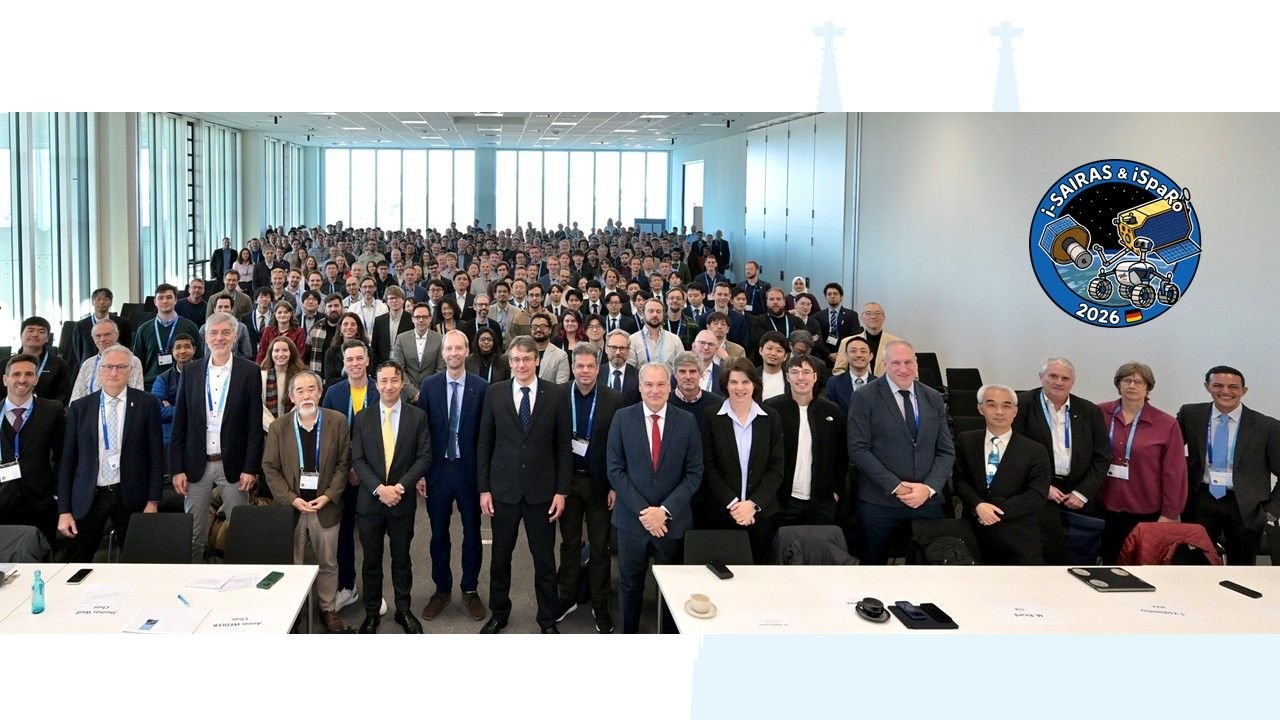
For the first time, the International Conference on Space Robotics (iSpaRo) and the International Symposium on Artificial Intelligence, Robotics and Automation in Space (i-SAIRAS) are being held together. The joint event runs in Cologne, Germany, from 3 to 6 November 2026, with 438 registrations and 215 oral presentations, 99 of them from iSpaRo.
Thank you to DLR for organizing a successful event at the relatively new Confex venue, bringing together most of the space robotics community.
iSpaRo papers are fully reviewed by several experts who provide feedback, and they will be published by IEEE Xplore. That level of rigour is what makes the work worth building on.
One thing stands out. Traditional space is the backbone of this field. In planetary exploration especially, the driver is benefit to humanity rather than a business case, and space agencies are best placed to carry that mission. It remains to be seen when future space missions will require more commercial robotics solutions, as the sector transitions towards New Space.
All opening speeches and keynotes came from space agencies and academia, who also contributed most of the papers. New Space start-ups were present in the exhibition area. Overall, the programme reflected the make-up of the i-SAIRAS organizers: the Canadian Space Agency (CSA-ASC), the German Aerospace Center (DLR), ESA, the Japanese Aerospace Exploration Agency (JAXA) and NASA.
Six parallel sessions over three days show how much progress space robotics is making. Most of the academic contributions are again funded by taxpayers, like the space agencies themselves. The privately funded space robotics sector deserves a bigger place at future conferences. Representation from more space agencies would also be great and would make the event even more representative.
iSpaRo is a young conference, started in 2024. It exists to fill the gap between established robotics conferences and non-peer-reviewed space event, bringing researchers, space agencies and industry together. That purpose is where I see the opportunity for future editions. Space robotics is the enabler of the New Space economy and of expansion beyond Earth, so inviting New Space start-ups to give keynotes alongside the space agencies would bring industry’s voice closer to the centre of the programme. Agencies and start-ups work on the same challenges from different angles, and hearing them side by side would benefit everyone in the room.