


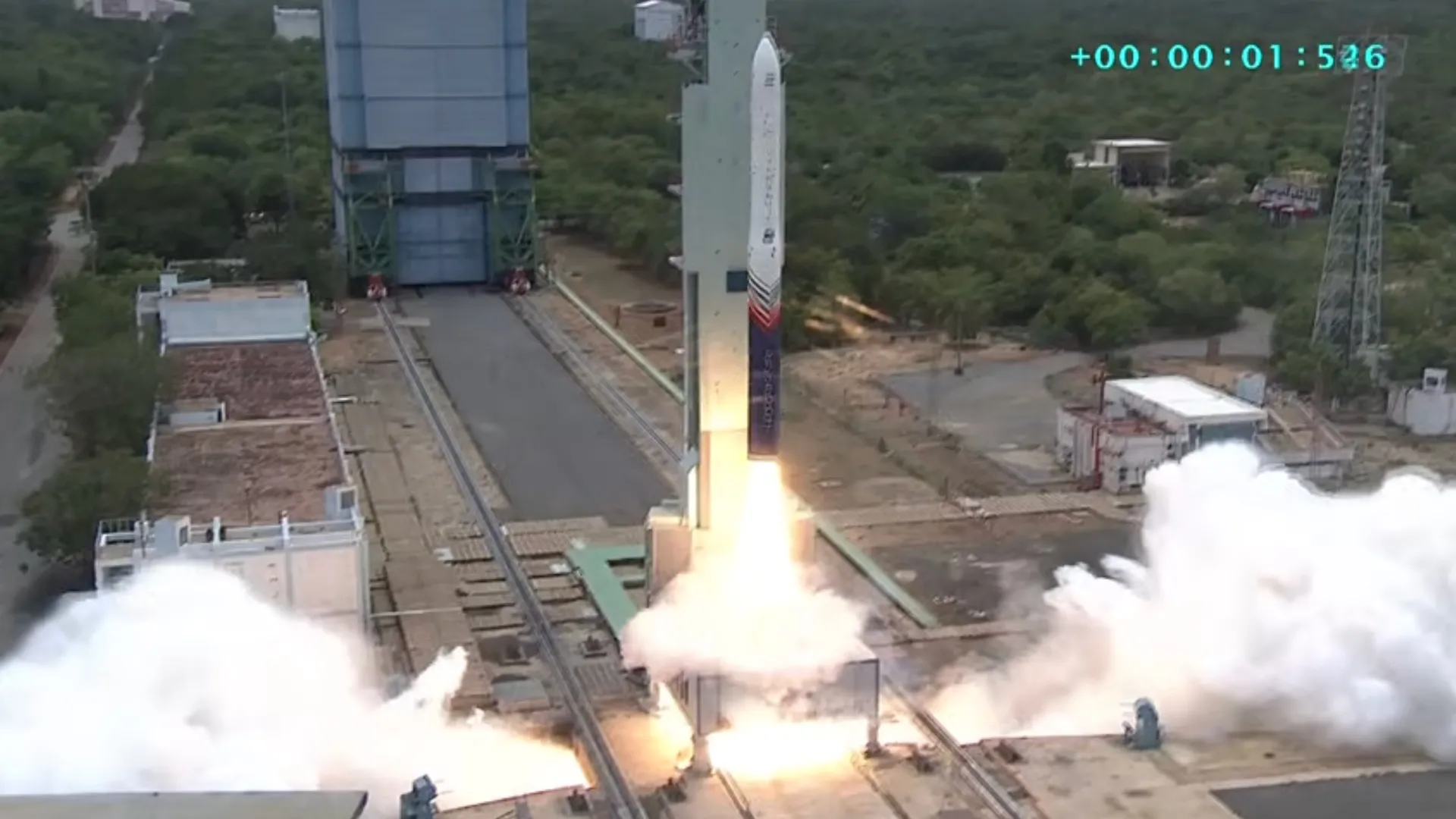
India is now only the third country, after the US and China, with a private company capable of orbital launch. Skyroot Aerospace, India’s first space unicorn, succeeded in the maiden orbital flight of Vikram-1 under Mission Aagaman, a Sanskrit word meaning “Arrival”.
Six payloads flew aboard the mission — five Indian and one international payload from Germany. Succeeding on the first launch is a huge achievement, demonstrating Indian engineering excellence at a fraction of the budgets of U.S. and European companies.
It also puts into perspective how hard orbital launch is: despite substantial government funding, Europe’s launch start-ups are still working towards their first successful orbital flight, with Orbex recently entering administration.
Access to space remains a major bottleneck, with satellite operators often waiting months or even years for a launch opportunity — and Skyroot plans to change that. Instead of sharing space on large rockets that fly on fixed schedules, customers can book a dedicated mission tailored to their satellite and its required orbit — much like taking a taxi instead of waiting for a train.
Mission Payloads:
SCOPE – Skyroot Aerospace (India): In-house technology demonstration satellite collecting critical flight data and validating onboard systems.
Embrace – Cosmoserve Space (India): Robotic-arm demonstrator for future active debris removal, supporting the Hyderabad start-up’s planned Reviver and Mothercraft servicing spacecraft.
SOLARAS S3 – Grahaa Space (India): Nanosatellite validating Grahaa’s platform, monitoring solar radiation, and capturing Earth imagery transmitted via SSTV signals for amateur radio operators to decode.
uD3PP & mD3RN – Dcubed (Germany): The mission’s only international payload flight-tests a Micro Pin Puller and Milli Release Nut, establishing flight heritage.
Cosmic Bloom & Gold Microsculpture (India): Two commemorative payloads — a floral jewellery artwork by Cosmos Diamonds and an 18K gold miniature rocket with microsculptures of Dr. Vikram A. Sarabhai, Dr. C. V. Raman, and Dr. A. P. J. Abdul Kalam.
Vikram-1 is a four-stage rocket standing 26 metres tall, capable of lifting 350 kg to Low Earth Orbit. Its 3D-printed Raman engines cut engine weight by nearly half and reduce production time by around 80 percent. Built from carbon composites, it is lighter, cheaper, and faster to produce than conventional rockets.
What Skyroot represents is bigger than one rocket. India has long competed on cost for equal quality — and the small satellite launch market is next.
Image credit: Skyroot Aerospace
Diamonds and ‘cab to orbit’: Rocket aiming to transform India’s space ambitions takes off
https://www.bbc.com/news/articles/clyekv7rld3o
Skyroot Aerospace Becomes India’s First Space Unicorn — With a Launcher Already on the Pad