


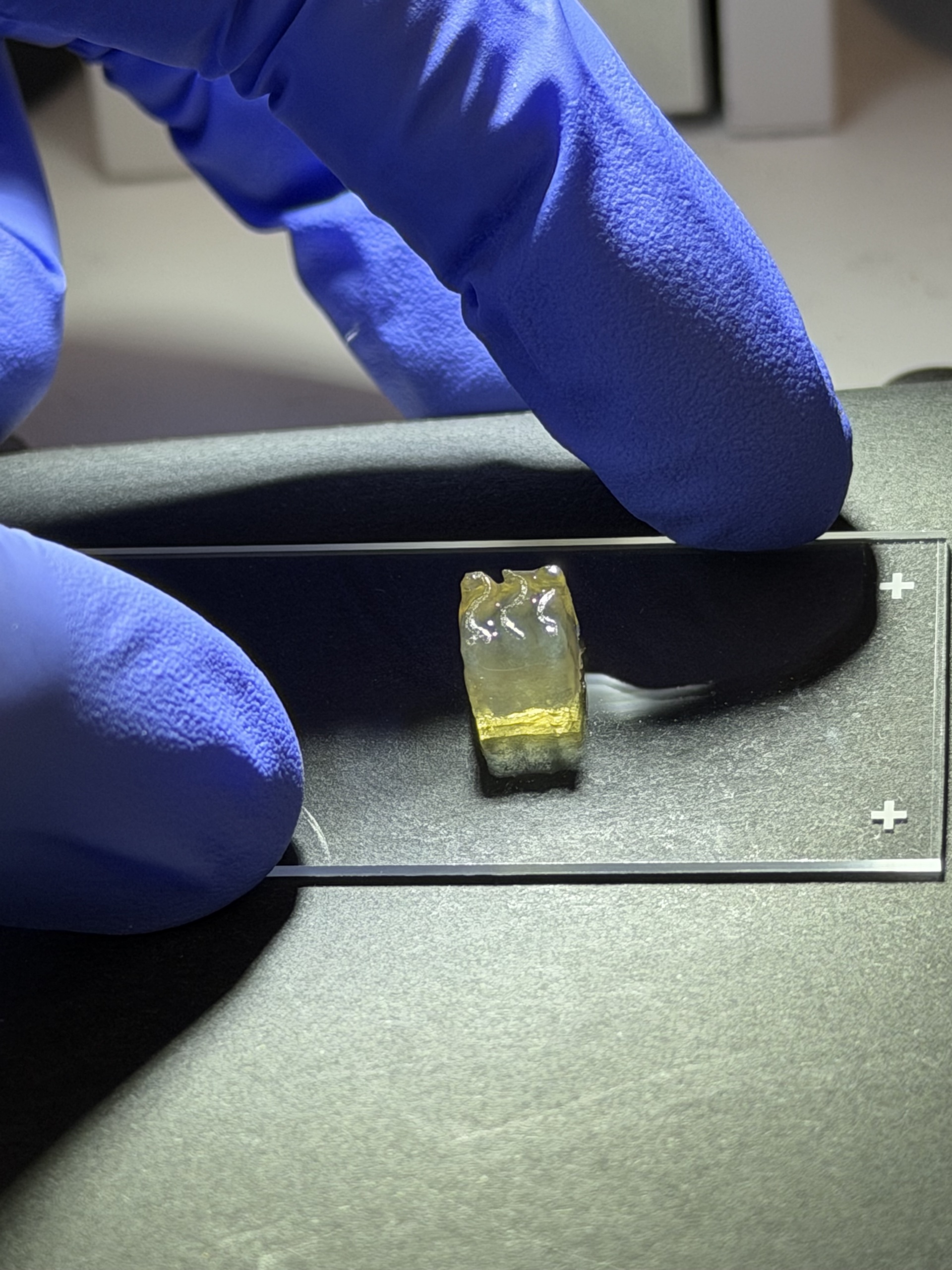
Auxilium Biotechnologies has bioprinted kidney and liver tissue in orbit for the first time — both manufactured aboard the International Space Station on the company’s AMP-1, the Auxilium Microfabrication Platform. The tissues, along with 28 nerve repair implants, returned to Earth on Mission AXLM-3, which flew on NASA’s SpaceX CRS-34 and splashed down off the California coast on June 17, 2026.
The result, in numbers:
AMP-1 produced three distinct tissue types — kidney, liver, and cartilage — plus 28 nerve repair implants across 20 printing sessions within a single mission, averaging one to two sessions per day. This marks the first time kidney tissue has been manufactured in space, the first time liver tissue has been manufactured in space, and the first demonstration of multi-product biomanufacturing in orbit. AMP-1 reliably printed multiple structures per session in various shapes and sizes, operating remotely with minimal astronaut intervention. Producing 28 implants across 20 sessions isn’t just a technical first — it’s proof the platform can manufacture at scale, not just once.
The tissues were made using cells and designs from the Wake Forest Institute for Regenerative Medicine. Auxilium supplied the orbital manufacturing hardware that made fabrication in microgravity possible.
Why microgravity matters for cartilage:
Investigators hypothesize that 3D printing in microgravity eliminates the cell-settling phenomenon that limits tissue printing on Earth, enabling uniform cell distribution and properly organized cartilage tissue suitable for treating cartilage injuries.
Why versatility matters more than any single result:
Most space manufacturing demonstrations still prove out one product, one time. AMP-1 produced tissues and implantable medical products in the same operational cycle — a distinction that matters as commercial platforms shift from single-experiment testbeds to multi-user manufacturing hubs.
Space and Earth applications
In orbit, this technology could let crews on private missions print viable tissues on-demand to treat a range of health conditions, reducing dependency on resupply and Earth-based timelines. On the ground, the same advances in space bioprinting could translate into improved treatments for injuries.
What comes next
With the ISS approaching retirement, Auxilium is positioning AMP-1’s manufacturing technology for the commercial stations replacing it, including collaborations with Vast and Starlab. Beyond LEO, the company is developing capabilities aimed at sustained lunar presence and deep-space missions.
Orbital biotech infrastructure is making progress fast. Sustainability still has to be proven.
Image Credit: Auxilium Biotechnologies
InSPA-Auxilium Bioprinter-Cell Printing
https://www.nasa.gov/mission/station/research-explorer/investigation/?#id=9545
NASA’s SpaceX CRS-34 Dragon Returns Packed with Space Station Science
NASA’s SpaceX CRS-34 Dragon Returns Packed with Space Station Science
Auxilium Biotechnologies Achieves Historic Space Bioprinting Milestone, Successfully Bioprinting Kidney and Liver Tissues in Orbit for the First Time
Auxilium Biotechnology