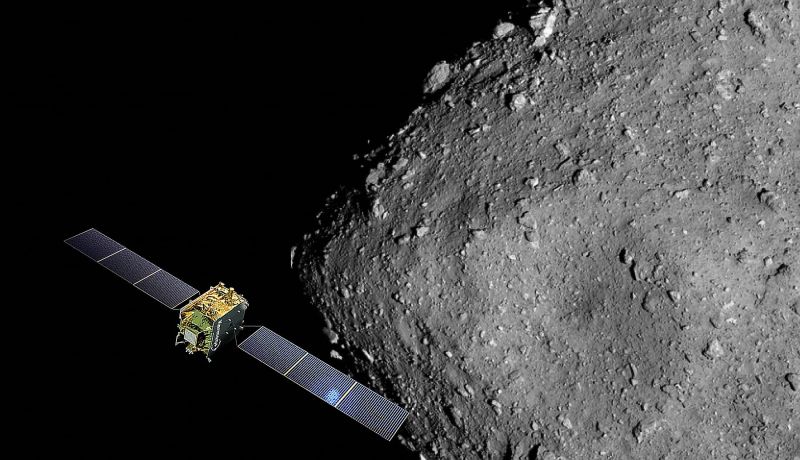
Karman+, the Colorado-based asteroid mining startup, has secured $20 million in seed financing to advance development of its inaugural demonstration mission—High Frontier—scheduled for launch in February 2027. The company’s name draws inspiration from the Kármán Line, the boundary where Earth’s atmosphere gives way to space, mirroring co-founders Teun van den Dries and Daynan Crull‘s approach to reimagining space resource utilization.
While recent asteroid missions carried substantial price tags—JAXA’s Hayabusa-2 cost approximately $250 million and NASA’s OSIRIS-REx approached $1.16 billion—Karman+ aims to achieve comparable objectives at a fraction of the cost.
“We looked at the list of materials for Hayabusa-2 and threw out everything that we felt we didn’t need,” explained van den Dries. The company initially targeted a $25 million budget before progressively reducing estimates to $20 million and ultimately $10 million.
Karman+ attributes these cost efficiencies to vertical integration, developing approximately 80% of expensive spacecraft components in-house while strategically outsourcing the remainder. The company has integrated key personnel from the OSIRIS-REx program, leveraging knowledge from a previous successful mission while encouraging innovation outside traditional aerospace constraints.
High Frontier will deploy via SpaceX’s Transporter-19 rideshare to Low Earth Orbit before self-propelling to a near-Earth asteroid. The mission aims to demonstrate autonomous navigation, asteroid rendezvous capabilities, and extraction of approximately one kilogram of resources.
The company’s early commercial strategy centers on processing asteroid materials in space to provide orbital refueling services. While this capability has been validated in laboratory settings, Karman+ plans to demonstrate operational refueling during a second mission currently also targeted for 2027.
With four additional spacecraft planned for 2028 and eight more in 2029, Karman+ is building toward comprehensive asteroid resource utilization supporting in-space servicing, manufacturing, and refueling. The company also envisions returning space resources to Earth in later mission phases.
This funding represents another win for the New Space approach, which prioritizes rapid iteration, cost efficiency, and commercial viability over the expensive, often over-engineered solutions of traditional space development. Despite the significant technical and financial risks inherent to asteroid mining ventures, Karman+’s methodology and economical spacecraft design could help push the entire field forward, making space resources accessible in ways previously considered not economically feasible.
𝗞𝗮𝗿𝗺𝗮𝗻+ 𝗦𝗲𝗰𝘂𝗿𝗲𝘀 $𝟮𝟬𝗠 𝘁𝗼 𝗗𝗲𝗺𝗼𝗻𝘀𝘁𝗿𝗮𝘁𝗲 𝗘𝗰𝗼𝗻𝗼𝗺𝗶𝗰𝗮𝗹 𝗔𝘀𝘁𝗲𝗿𝗼𝗶𝗱 𝗠𝗶𝗻𝗶𝗻𝗴