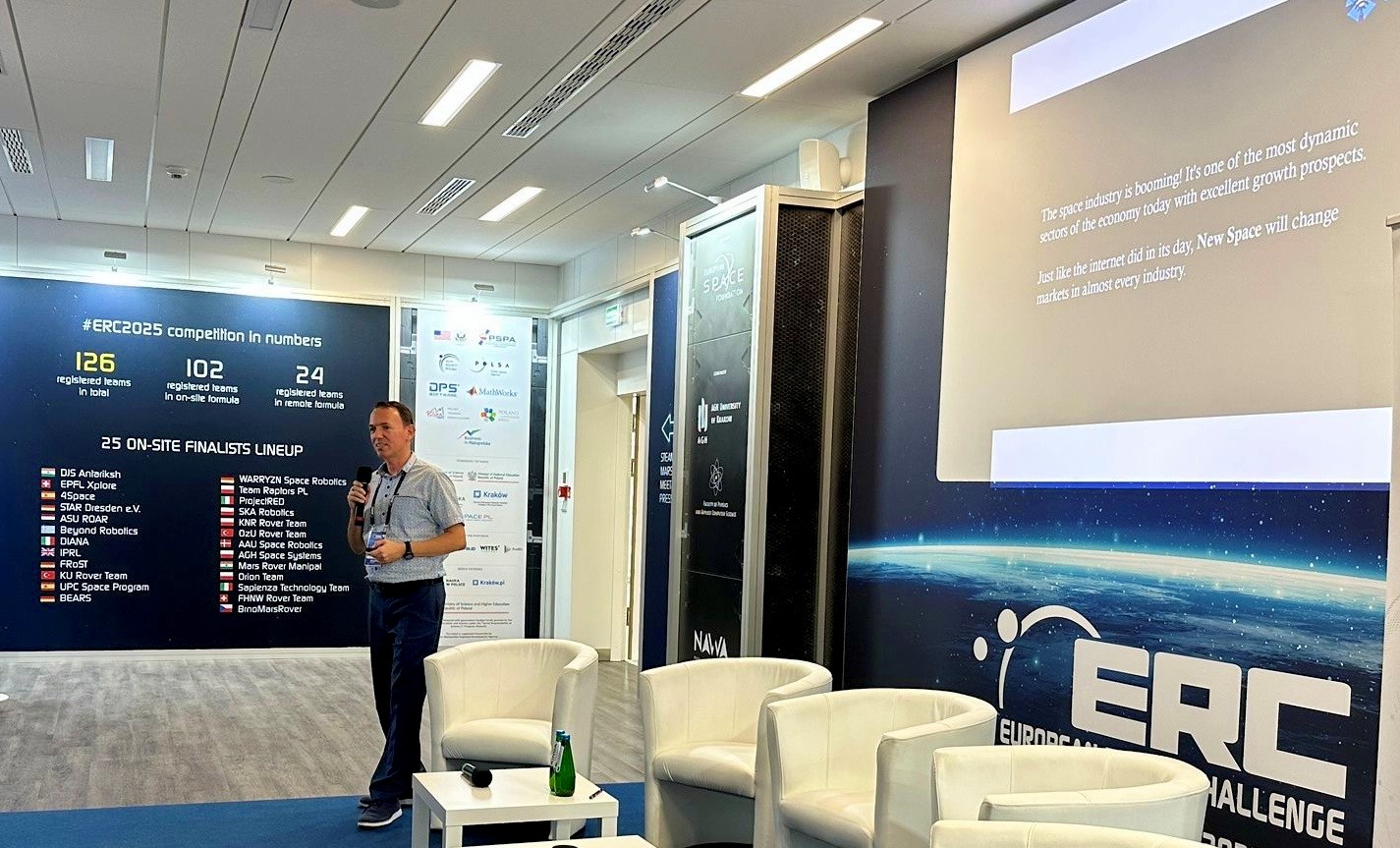
I was invited as a keynote speaker at the European Rover Challenge (ERC) in Krakow, Poland. The event was organized by the European Space Foundation with the co-organizer AGH University of Krakow.
𝐖𝐡𝐚𝐭 𝐦𝐚𝐤𝐞𝐬 𝐍𝐞𝐰 𝐒𝐩𝐚𝐜𝐞 𝐟𝐮𝐧𝐝𝐚𝐦𝐞𝐧𝐭𝐚𝐥𝐥𝐲 𝐝𝐢𝐟𝐟𝐞𝐫𝐞𝐧𝐭 𝐟𝐫𝐨𝐦 𝐭𝐫𝐚𝐝𝐢𝐭𝐢𝐨𝐧𝐚𝐥 𝐒𝐩𝐚𝐜𝐞?
This was one of the questions from the audience. New Space emerged in the early 1990s as a paradigm shift from traditional space through three defining characteristics: agile product development, private investment-driven business models, and taking higher risks with less testing and COTS products. Where traditional space operates on government cost-plus contracts with 5-10 year development cycles, New Space companies embrace entrepreneurial risk-taking with 1 year deployment timelines using commercial off-the-shelf (COTS) components.
Traditional space companies are adapting toward greater agility, but institutional ownership structures limit their ability to implement changes as rapidly as New Space ventures. While the gap between traditional and New Space approaches continues to narrow, these fundamental differences persist.
SpaceX exemplifies a New Space business, achieving a price of approximately $67 million per launch compared to traditional systems exceeding $400 million, while maintaining a 60% market share in global commercial launches. This cost efficiency stems from reusable rocket technology, vertical integration, and accepting higher technical risks for faster innovation cycles. The dramatic cost reductions in launch services through reusable rockets are democratizing space access for 10,000+ companies globally.
𝐇𝐨𝐰 𝐭𝐨 𝐉𝐨𝐢𝐧 𝐭𝐡𝐞 𝐍𝐞𝐰 𝐒𝐩𝐚𝐜𝐞 𝐄𝐜𝐨𝐧𝐨𝐦𝐲 𝐚𝐬 𝐚 𝐆𝐫𝐚𝐝𝐮𝐚𝐭𝐞?
· Number one advice is to do a degree that has an internship. No theoretical studies can replace hands-on work experience.
· Volunteer or do an internship outside your degree. Join the Space Generation Advisory Council or there are many New Space companies you can volunteer with or do your internship. My team at Team Tumbleweed for example is looking for unpaid volunteers or interns.
· Network at local space events, conferences and of course on LinkedIn. Write an article about a topic you are passionate about. I’m happy to review your article or collaborate.
· Update your CV and LinkedIn profile. If no one has reviewed you CV for the space sector yet, then send it to me for a free review.
The ERC showcased impressive engineering talent from universities worldwide. As space becomes more accessible, today’s students could play important roles in advancing space exploration upon graduation. Their dedication to innovation offers hope for continued progress in this evolving field.
𝐁𝐮𝐢𝐥𝐝𝐢𝐧𝐠 𝐂𝐚𝐫𝐞𝐞𝐫𝐬 𝐢𝐧 𝐍𝐞𝐰 𝐒𝐩𝐚𝐜𝐞: 𝐊𝐞𝐲 𝐓𝐚𝐤𝐞𝐚𝐰𝐚𝐲𝐬 𝐟𝐫𝐨𝐦 𝐌𝐲 𝐊𝐞𝐲𝐧𝐨𝐭𝐞 𝐚𝐭 𝐭𝐡𝐞 𝐄𝐮𝐫𝐨𝐩𝐞𝐚𝐧 𝐑𝐨𝐯𝐞𝐫 𝐂𝐡𝐚𝐥𝐥𝐞𝐧𝐠𝐞 2025