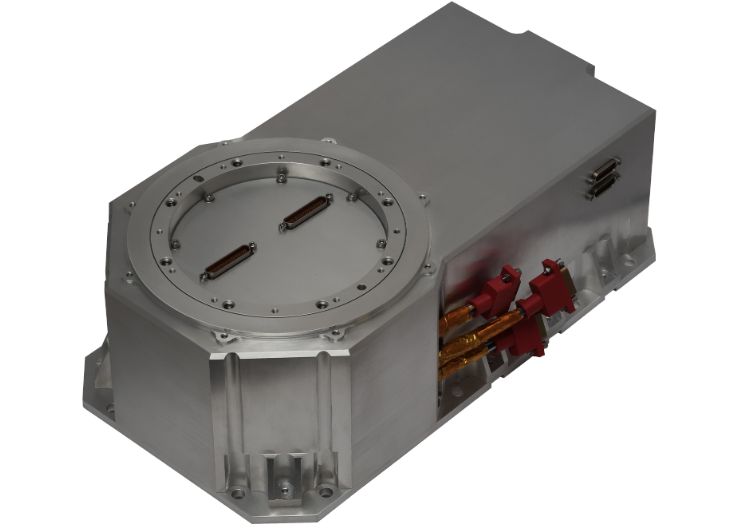
When a CubeSat’s solar panels do not face the sun for extended duration, mission capabilities can plummet. Revolv Space recognized this fundamental constraint and built SARA—a Solar Array Rotary Actuator that transforms how small satellites harvest the sun’s energy. Unlike fixed arrays, SARA actively tracks the sun, maximizing orbital average power for payload operations. The autonomous system incorporates fail-safe redundancy, maintaining functionality even under unexpected mechanical stress—eliminating a critical failure mode that has ended missions prematurely
In May 2024, Revolv Space secured €2.6 million in seed funding to support production scaling, establish their Turin office, and prepare SARA for its orbital demonstration. This funding enabled the company to advance from laboratory testing to flight-ready hardware within months—a compressed timeline in an industry where development cycles typically span years.
The company reached a significant milestone in March 2025 when SARA launched aboard SpaceX’s Transporter-13 mission. Over the following eight months, the system operated continuously in orbit, validating its autonomous sun-tracking capabilities and fail-safe mechanisms under real space conditions. On 10 November 2025, the successful completion of in-orbit demonstration advanced SARA to Technology Readiness Level 9 (TRL9), confirming full operational readiness.
August 2025 marked commercial validation when Revolv Space received its first U.S. order for six SARA units from a leading satellite integrator. This contract demonstrated market demand for autonomous solar tracking technology and established Revolv Space’s position within the small satellite ecosystem beyond European markets.
On 18 November 2025 at Space Tech Expo Europe in Bremen, Revolv Space announced MARA, its next-generation Solar Array Drive Assembly (SADA) for medium-sized platforms and constellations. MARA targets the gap between body-mounted solar arrays and costly, bespoke-design SADAs sold by legacy manufacturers. The new actuation system, based on Revolv Space’s proprietary and flight-proven twist capsule technology, extends the company’s power solutions to support spacecraft of up to 1,000 kg and 10 kW—significantly expanding their addressable market.
With SARA achieving TRL9 status and MARA now entering the market, Revolv Space addresses a persistent challenge in continuously powering satellites. Its flight-proven solution that scale from CubeSats to 1,000 kg platforms—may reshape solar array decisions in the industry.
Revolv Space: Maximizing Solar Energy Capture from CubeSats to Medium-Sized Satellites