


Until recently, most everyone accepted the conventional wisdom that the moon has virtually no atmosphere. Just as the discovery of water on the moon transformed our textbook knowledge of Earth’s nearest celestial neighbor, recent studies confirm that our moon does indeed have an atmosphere consisting of some unusual gases, including sodium and potassium. It’s an infinitesimal amount of air when compared to Earth’s atmosphere. In fact, the density of the atmosphere at the moon’s surface is comparable to the density of the outermost fringes of Earth’s atmosphere where the International Space Station orbits.
One of the critical differences between the atmospheres of Earth and the moon is how atmospheric molecules move. Here in the dense atmosphere at the surface of Earth, the molecules’ motion is dominated by collisions between the molecules. However, the moon’s atmosphere is so thin, atoms and molecules almost never collide. The technical name for this type of thin, collision-free atmosphere that extends all the way down to the ground is a “surface boundary exosphere.” Scientists believe this may be the most common type of atmosphere in the solar system. In addition to the moon, the larger asteroids, a number of the moons of the giant planets and even some of the distant Kuiper belt objects out beyond the orbit of Neptune, all may have surface boundary exospheres.
A team of scientists from MIT and the University of Chicago has now pinpointed the primary process responsible for this delicate lunar atmosphere. Their study, published in Science Advances (https://www.science.org/doi/10.1126/sciadv.adm7074), reveals that “impact vaporization” is the main mechanism at work.
This process occurs when meteorites and micrometeoroids bombard the lunar surface, vaporizing soil particles upon impact. Some of these vaporized atoms are ejected into space, while others remain suspended above the Moon, forming its thin exosphere.
The researchers analyzed lunar soil samples collected during NASA’s Apollo missions, focusing on the isotopes of potassium and rubidium. Their findings suggest that approximately 70% of the Moon’s atmosphere is generated by meteorite impacts, with the remaining 30% attributed to solar wind interactions.
This discovery not only enhances our understanding of the Moon but also has implications for other celestial bodies. The findings underscores the importance of sample return missions in space exploration. As lead author Nicole Nie points out, “Without the Apollo samples, we would not be able to get precise data and measure quantitatively to understand things in more detail. It’s therefore important to bring samples back from the moon and other planetary bodies, so we can draw clearer pictures of the solar system’s formation and evolution.”
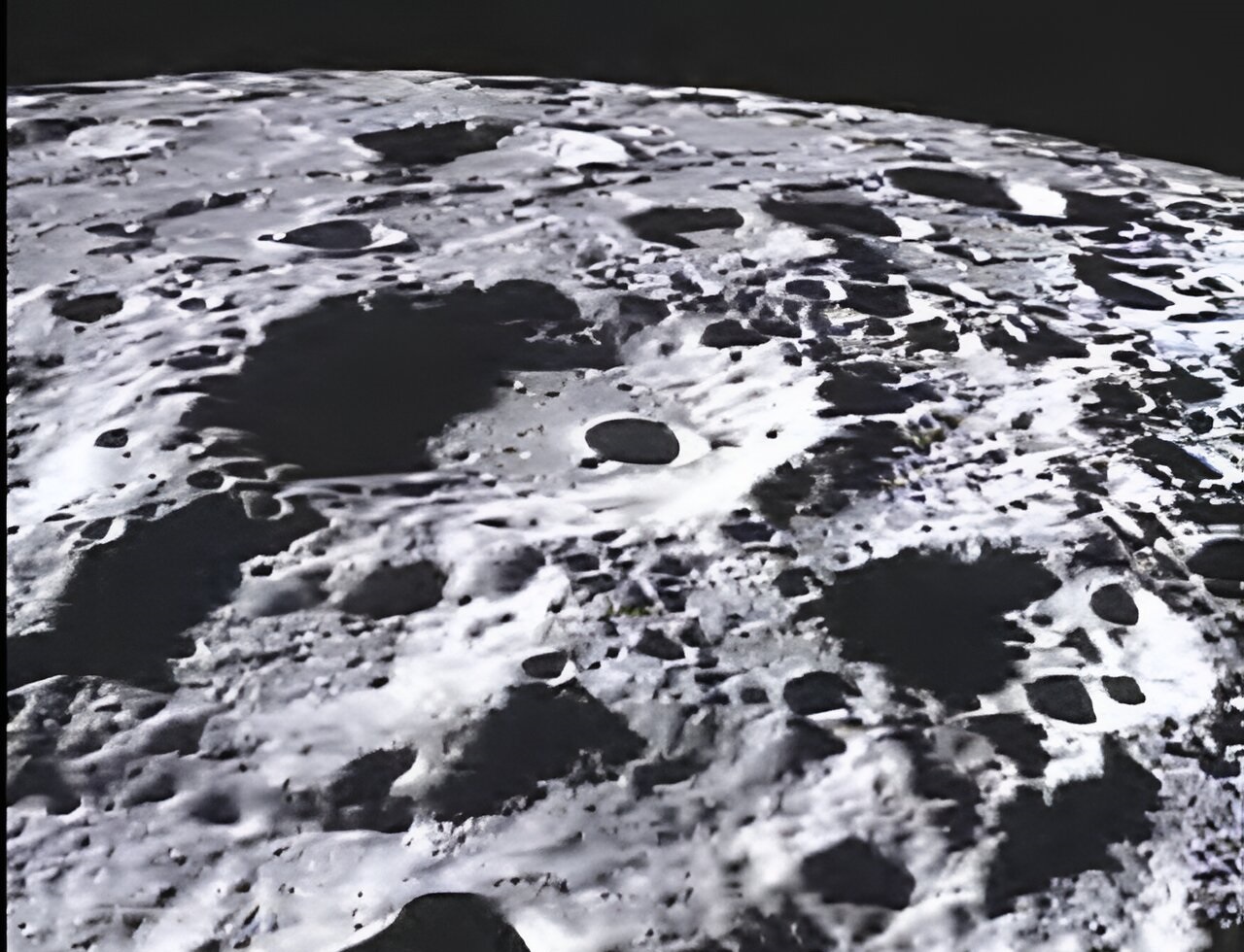
Image Credit: NASA/Caltech-JPL/MIT/SRS – Image of the lunar surface taken by the MoonKAM system onboard NASA’s Ebb spacecraft
An upcoming ESA LUnar Meteoroid Impacts Observer (LUMIO) mission is set to enhance our understanding of the frequency of meteoroid impacts on the Moon (https://www.linkedin.com/posts/tolgaors_cubesats-meteorimpacts-moonmission-activity-7219681109456900096-sEDl).