


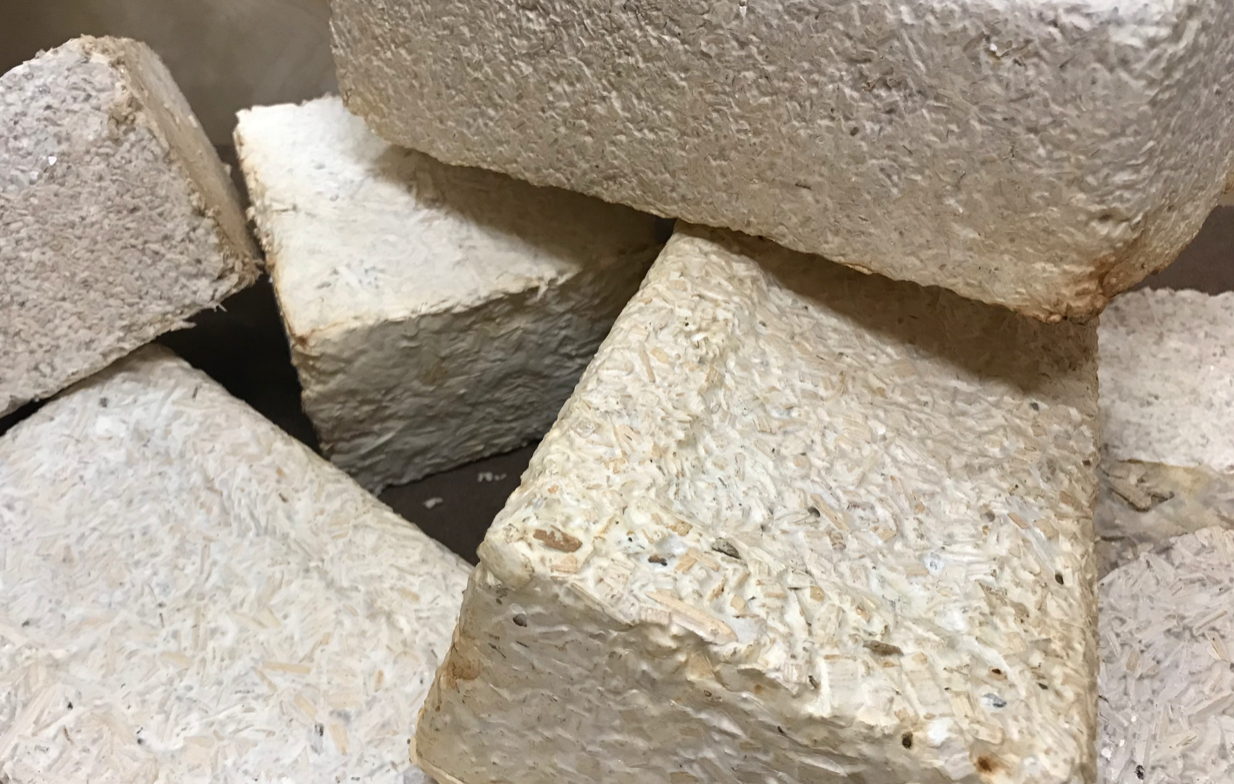
@NASA’s Innovative Advanced Concepts (NIAC) program has selected a novel habitat-growing concept for further development. The Mycotecture Off Planet project, led by Dr. @Lynn Rothschild at @NASA Ames Research Center, aims to investigate the potential of using fungi to create habitats for future space missions.
The project has received a Phase III NIAC award, providing $2 million over two years to advance the concept. This research explores the possibility of astronauts carrying compact structures containing dormant fungi, which could potentially grow into functional habitats when activated with water.
The concept leverages mycelia, the thread-like networks that form the main body of fungi. Researchers are examining how these structures might be used to create biocomposites suitable for space construction. If successful, this approach could offer a way to reduce the mass of materials needed for building habitats on other planetary bodies.
The research team has already conducted initial proof-of-concept work, creating prototypes and testing materials in a planetary simulator. They have also explored potential enhancements, such as incorporating radiation protection into the fungal-based structures. While the primary focus is on space applications, the technology could potentially have uses on Earth as well. Researchers are exploring possibilities such as water filtration and mineral extraction from wastewater.
Beyond their structural applications, fungi also present a promising solution for sustaining astronauts during long-duration missions. Various species of edible mushrooms are rich in proteins, vitamins, and minerals, making them a potentially valuable food source in space. Different fungal species could be cultivated for distinct purposes: some for construction materials, others for nutrition, and yet others for medicinal properties. This versatility could significantly reduce the payload required for extended missions, as a single biological system could serve multiple crucial functions.
As the project progresses, the team plans to optimize material properties and work towards testing in low Earth orbit. Future applications could include integration into commercial space stations or use in missions to the Moon and Mars.