


The dream of exploring Mars with spacecraft capable of autonomous data collection and analysis is becoming a reality. NASA’s Perseverance rover is at the forefront of showcasing how Machine Learning (ML) is leading to an evolution in our approach to planetary exploration. So called experts have decided that all of ML is Artificial Intelligence (AI) by changing the definition, although most of these algorithms are not even close to resemble human level intelligence.
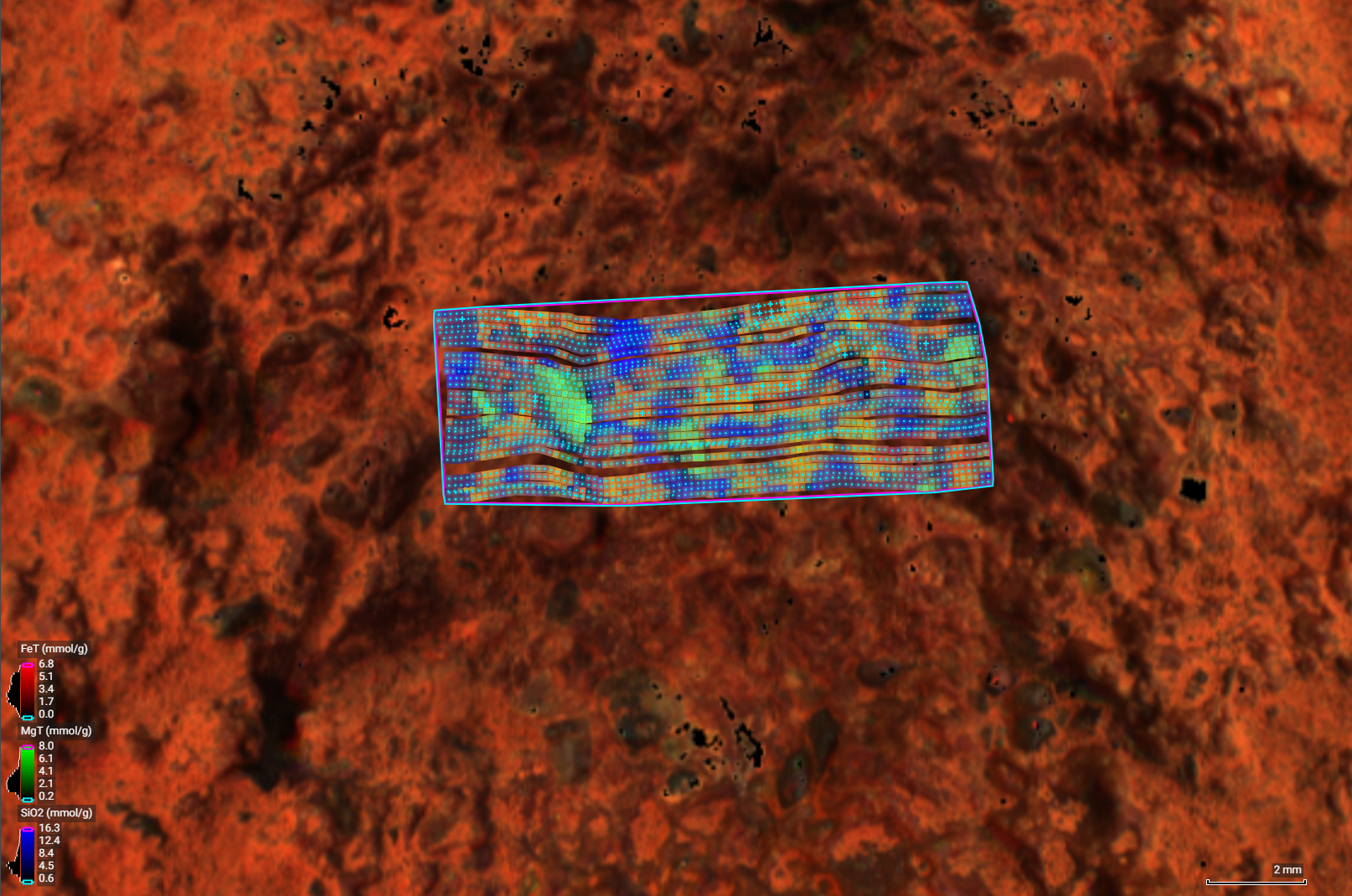
For nearly three years, Perseverance has been pioneering the use of ML on Mars, making autonomous decisions based on real-time analysis of rock composition – a first in extraterrestrial exploration. At the heart of this innovation is PIXL (Planetary Instrument for X-ray Lithochemistry), a spectrometer developed by @NASA’s Jet Propulsion Laboratory.
PIXL’s “adaptive sampling” software autonomously positions the instrument near rock targets and scans a postage-stamp-size area of a rock, firing an X-ray beam thousands of times to create a grid of microscopic dots. Each dot reveals information about the chemical composition of the minerals present. It then analyzes the scans to identify minerals worth closer examination, all without direct input from Earth. This ML-driven approach allows for more efficient and targeted scientific investigation.
Minerals are crucial to answering key questions about Mars. Depending on the rock, scientists might be on the hunt for carbonates, which hide clues to how water may have formed the rock, or they may be looking for phosphates, which could have provided nutrients for microbes, if any were present in the Martian past.
There’s no way for scientists to know ahead of time which of the hundreds of X-ray zaps will turn up a particular mineral, but when the instrument finds certain minerals, it can automatically stop to gather more data — an action called a “long dwell.” As the system improves through ML, the list of minerals on which PIXL can focus with a long dwell is growing.
Perseverance isn’t alone in leveraging ML on Mars. Its predecessor, Curiosity, located 3700km (2,300 miles) away, uses ML to autonomously zap rocks with lasers based on their shape and color, revealing their chemical composition. These ML capabilities allow both rovers to accomplish more in less time, despite still relying on Earth-based teams for daily command planning.
As we look to future deep space missions, the importance of ML and AI in space exploration becomes apparent. With increasing distances comes longer communication delays, making Earth-based control less practical. The advancements being tested on Mars today are helpful to identify the shortcomings of the current ML paradigm which hopefully will lead for more funding for more ‘intelligent’ algorithms and cognitive AI, which can enable more autonomous spacecraft capable of conducting complex navigation and scientific investigations in the farthest reaches of our solar system.