


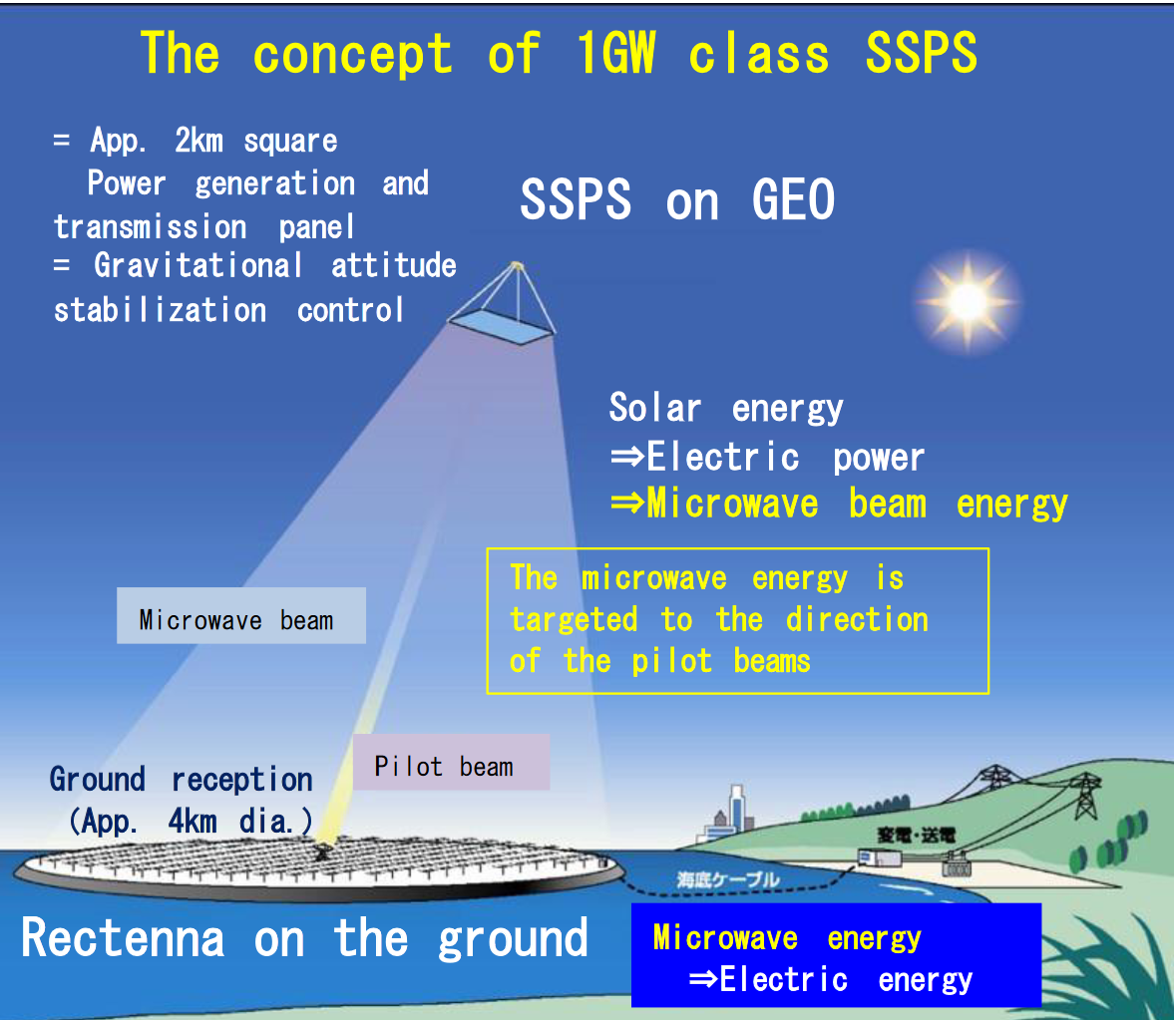
Japan aims to beam solar power from space to Earth by 2025. This initiative, part of the On-orbit experiment of HIgh-precision beam control using small SAtellite for MicrowAve power transmission (OHISAMA) project (Japanese for “sunshine”), aims to demonstrate the feasibility of space-based solar power generation and transmission.
The project, led by the Japanese space agency JAXA and involving public-private partnerships, will launch a small satellite weighing about 180 kilograms (400 pounds) into low Earth orbit. This miniature space-based solar power plant will use a 2-square-meter photovoltaic panel to generate electricity, which will then be converted into microwaves and beamed to receiving antennas on Earth.
While the initial demonstration will only transmit about 1 kilowatt of power, it represents a significant milestone in the development of space-based solar power technology. The concept offers several advantages over terrestrial solar power, including the ability to harvest energy continuously, unaffected by weather conditions or day-night cycles. The main disadvantages are the higher cost and more expensive maintenance costs in space.
Japan has already achieved notable firsts in this field, including the transmission of power via microwaves in space beaming 1.8 kilowatts of power for 55m to a space-based receiver in 2015. https://phys.org/news/2015-03-japan-space-scientists-wireless-energy.html
As other countries and space agencies, including the US, UK and the European Space Agency, also explore space-based solar power, Japan’s early demonstration could provide valuable insights and help address technical challenges. While concerns about cost-effectiveness remain, the OHISAMA project represents an exciting step towards harnessing the sun’s energy from space to power our planet sustainably.