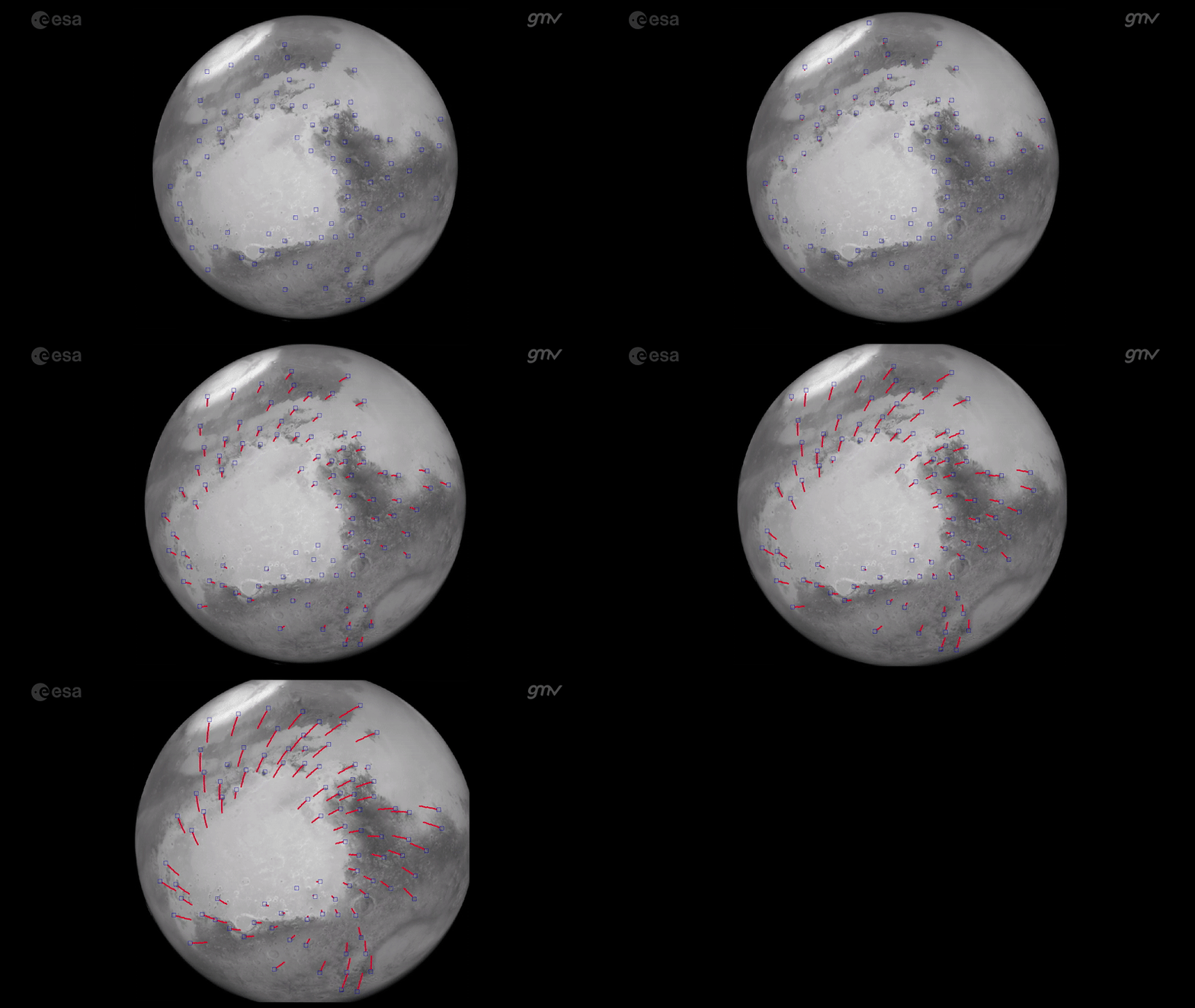
The recent European Space Agency – ESA’s Hera mission Mars flyby represented an opportunity to test the significant advancement in how spacecraft navigate autonomously using feature recognition from data recorded by spacecraft orbiting Mars. This technical achievement by GMV engineering teams from Spain and Romania demonstrates a capability to identify and track previously mapped surface features in real-time during a high-speed planetary encounter.
Unlike previous navigation systems that required detailed prior surface mapping, this technology successfully tracked up to 100 features distributed equally across four quarters of the target surface during the Mars flyby, prioritizing the top six distinctive elements for navigational calculations to maintain computational efficiency. The system performed these complex tasks at a distance of 5,700 km from Mars, processing images captured every 48 seconds by the Asteroid Framing Camera.
What distinguishes this technology is its broad applicability across various celestial bodies. While tested during a Mars flyby, the system was designed specifically for Hera’s primary mission around the Didymos-Dimorphos asteroid system. This versatility extends to potential lunar applications, where similar autonomous navigation capabilities could support both orbital missions and lunar landings.
As noted by Hera mission manager Ian Carnelli, “This technology can be reliably used for close proximity autonomous operations, lunar and planetary landings, paving the way for a variety of ambitious space missions.”
Hera’s performs vision-based processing of surface features using a separated core of the spacecraft’s main flight computer. A GMV-built Image Processing Unit has been placed on Hera, which runs on two customised Field Programmable Gate Array microprocessors.
This technology marks a crucial step toward more independent robotic exploration across the solar system, from asteroid missions to lunar and planetary landings, enabling spacecraft to navigate with minimal human intervention which is critical at destinations with communication delays including the moon as we have recently seen from unsuccessful lunar landings that did not use this advanced technology.
ESA’s Hera Mission Validates Critical Feature Recognition Navigation Technology at Mars