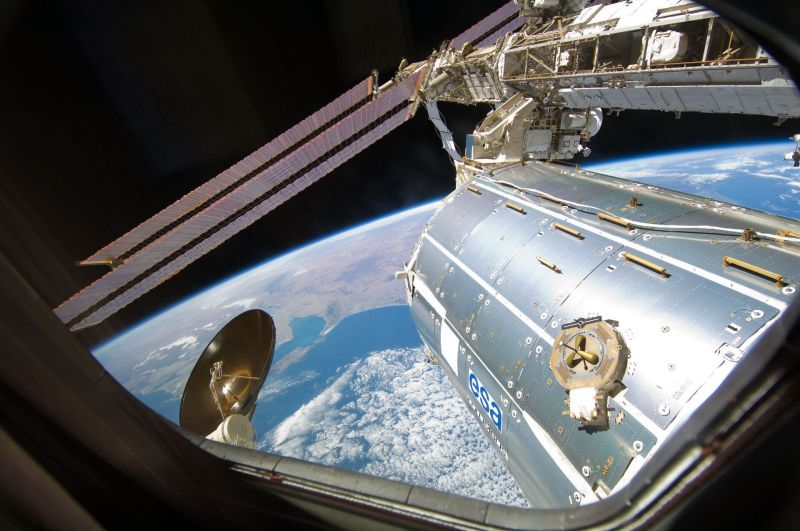
Delta biosciences, a Lithuania-based chemistry company developing space medicine solutions, and the European Space Agency – ESA will launch a long-term mission aboard the International Space Station (ISS) in early 2026, set to run for almost three years.
The objective is to test radiation-resistant pharmaceutical formulations in space. Understanding how medicines degrade during long-duration missions is critical—especially as we prepare for future journeys to the Moon and Mars. Nearly half of today’s medicines might not withstand extended deep-space conditions. By validating resilient formulations in orbit, the trials ensure astronauts remain safe and healthy far from Earth. This mission represents the first Lithuanian life sciences experiment going to space, underlining ESA’s commitment to fostering European innovation and international partnerships.
The endeavour marks a significant milestone for both Lithuania’s fast-emerging space industry and the global space medicine sector, becoming the first industrial life sciences mission of its kind. “We are inspired by ESA’s drive to advance applicable scientific solutions to enable a new era in human exploration,” said Dominykas Milasius, Delta Biosciences’ Co-Founder. “Medicines are designed with terrestrial logic, but space changes everything. Radiation, extreme temperatures, and the lack of resupply push pharmaceuticals to their limits. We are a chemistry company for the new space age, rethinking space medicine from first principles.”
“Space exploration is a global effort, and so is the challenge of keeping astronauts healthy,” said Onė Mikulskytė, Space Researcher at Delta Biosciences.
The experiment will test dozens of carefully selected molecules across two distinct locations aboard the ISS, each with different radiation exposure levels. By retrieving samples every eight months and analyzing them against ground-based controls, the team will create a detailed degradation profile of these compounds in real space conditions.
This mission stands as a testament to Lithuania’s growth in the space sector and its commitment to scientific excellence. By investigating how radiation alters critical medicines, the team is taking an essential step toward making deep-space exploration safer—while bringing space-age chemistry innovations back to Earth.
Delta Biosciences and the European Space Agency to Launch Landmark Space Medicine Mission to the ISS in 2026