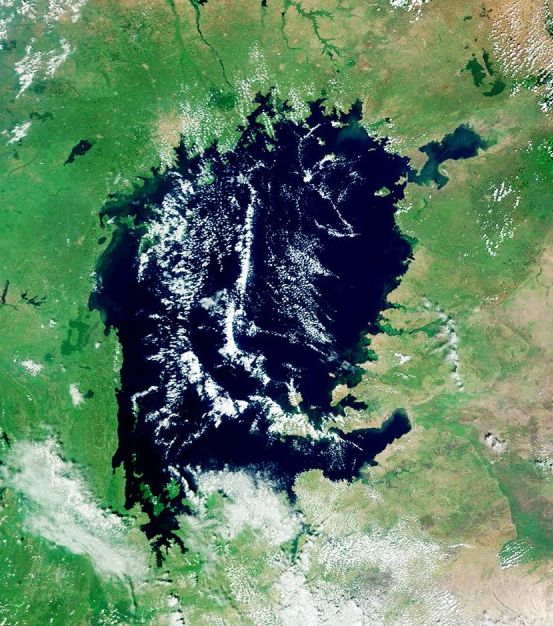
Africa’s lakes are lifelines. They provide food, drinking water, transport, and jobs for millions of people. But these precious waters face serious challenges — pollution, rising demand, and the unpredictable effects of climate change. Now, a new research project called Satellite-based Water Assessment for Holistic Integrated Lake Information (SWAHILI) is turning to space to help protect them.
Led by the University of Energy and Natural Resources in Ghana together with the University of Cambridge in the UK, the project will use Earth Observation (EO) satellites to track the health of lakes across Africa. By combining images from multiple EO satellites with advanced machine learning (ML) algorithms, the team can monitor water quality, levels, and even early signs of pollution.
Why does this matter? Earth Observation (EO) satellites can observe large areas continuously and at low cost. This makes it possible to spot changes faster — whether it’s algae blooms threatening fish stocks, falling water levels putting communities at risk, or pollution from farming and industry.
The project will also develop open-source tools so that scientists, local authorities, and policymakers can easily access the data. These tools will provide actionable insights, from helping farmers manage irrigation to supporting governments in protecting freshwater ecosystems.
To test their solutions, the researchers are focusing on two critical lakes: Lake Bosomtwe in Ghana, a UNESCO Biosphere Reserve, and Lake Victoria, Africa’s largest lake, shared by three countries and supporting the livelihoods of over 40 million people. Success could result in monitoring hundreds of other lakes across the continent.
This project is one of ten European Space Agency – ESA EO AFRICA R&D Facility African–European tandem research projects. Each project runs for 15 months (Sept 2025–Dec 2026) with €30,000 funding.
As a side note, Swahili is one of three official languages of the East African Community. SWAHILI is more than just a science project — it’s a step toward building resilience in African communities. Clean, well-managed lakes mean healthier people, stronger food security, and sustainable development for the future.
Building Water Security for Africa: An Earth Observation Satellite and Machine Learning Powered Approach