Traditional space has long been perceived as a domain reserved for the most physically fit. Yet by accepting this assumption, we constrain our vision and fail to design for humanity as a whole, limiting who gets to shape what the space age should look like.
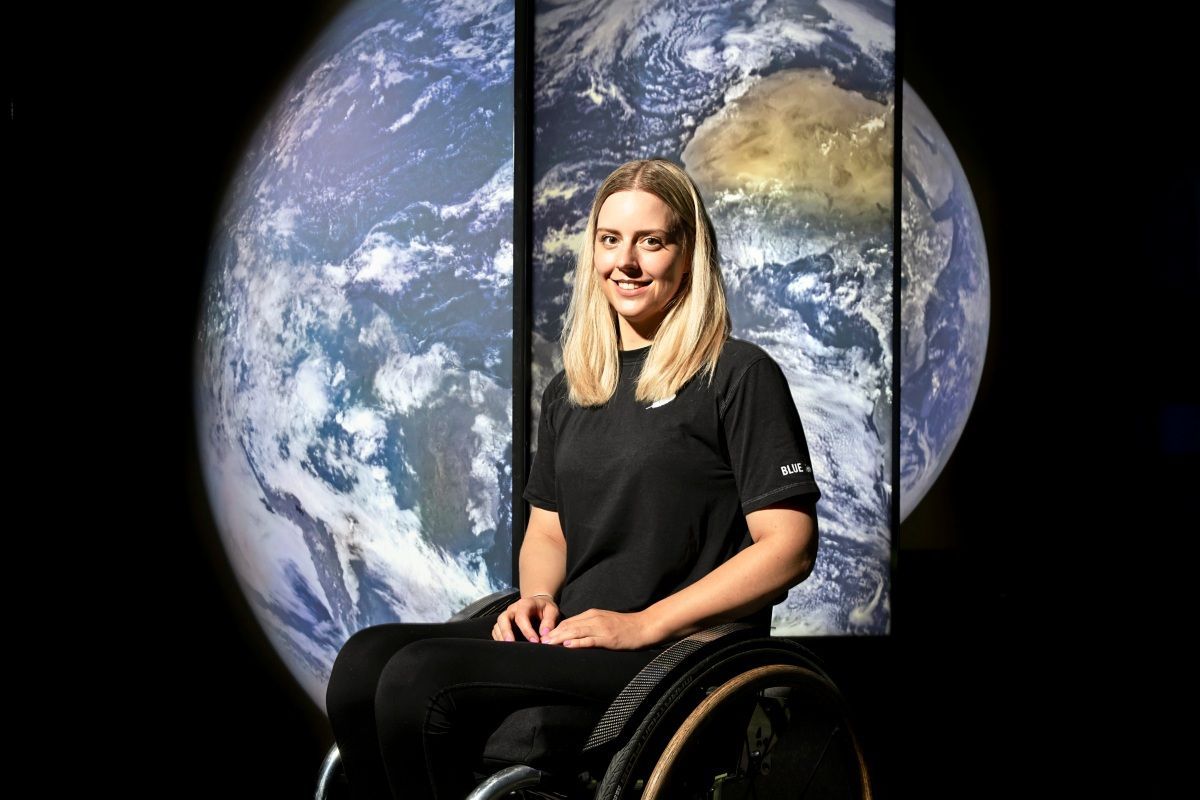
Michaela Benthaus is changing that narrative. After suffering a spinal cord injury in a mountain biking accident, she has advocated for greater accessibility in space since 2018. Now, she has become the first wheelchair user to cross the Karman line.
While studying space science at the Technical University of Munich, Benthaus participated in a parabolic zero-g flight in 2022 through the US-based AstroAccess program, experiencing weightlessness for the first time. The organization’s mission is to promote “the inclusion of people with disabilities in human spaceflight.” Pursuing her passion for space, Benthaus graduated and was accepted into an ESA young graduate program in 2024 to work on Mars radio occultation.
On the 20th of December, Benthaus flew into space on a sub-orbital flight, aboard a Blue Origin capsule. “I can’t change the world on my own. But I hope that my flight will help raise awareness of people with disabilities and remove some of the obstacles they face,” she says. Her mission aims to make participation by people with disabilities in space missions as standard practice.
“My flight is drawing attention,” Benthaus notes. “I’ve already been invited to speak before the European Parliament. There’s also a fundraiser for Wings for Life’s spinal cord research. I would like to see faster progress toward a barrier-free world for people with disabilities.” Her mission highlights critical gaps in spacecraft design, protocols, and systems that must accommodate everyone, regardless of physical conditions.
The European Space Agency – ESA‘s Parastronaut Program demonstrates progress toward inclusive space exploration, though considerable work remains. As space transitions to a broader industry encompassing tourism and habitats, inclusive design becomes imperative. In this sector, retrofitting costs billions and compromises safety. Designing for inclusion from the outset isn’t just ethical—it’s essential to building a space industry that’s safe, sustainable, and accessible to all.
Breaking Barriers: Building Inclusive Spaceflight Today