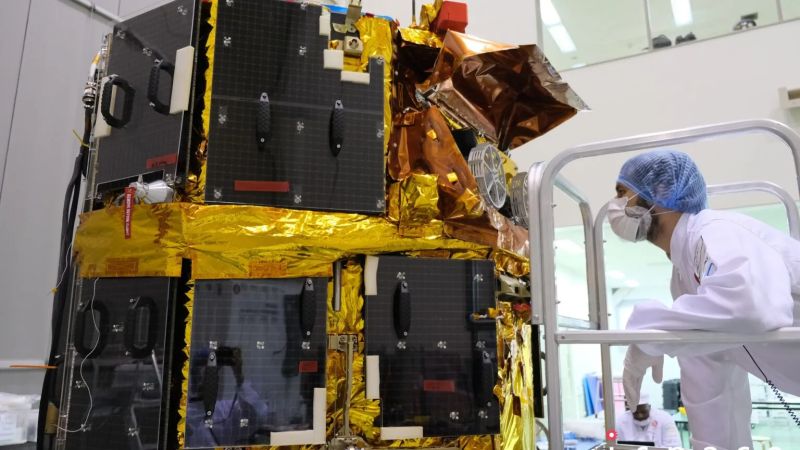
Yesterday marked a significant milestone in commercial lunar exploration as Japanese space company ispace, inc. successfully launched its RESILIENCE lunar lander aboard a SpaceX Falcon 9 rocket. RESILIENCE is based on ispace’s Hakuto-R solar-powered lander platform.
The RESILIENCE lander carries five diverse payloads:
• TENACIOUS: A 5-kg micro rover developed by ispace, inc.‘s European subsidiary in Luxembourg. This compact rover features a carbon fiber-reinforced plastic frame, a forward-mounted HD camera, and specialized tools for collecting lunar regolith samples.
• Water Electrolyzer Experiment: Developed by Takasago Thermal Engineering, this technology aims to demonstrate the extraction of oxygen and hydrogen from lunar water resources. The successful demonstration of this process could enable future fuel and life support systems on the Moon.
• Algae-based Food Production Module: Contributed by Japanese biotechnology firm 株式会社ユーグレナ – Euglena Co., Ltd., this self-contained module will test the cultivation of algae as a potential food source in the lunar environment, advancing our understanding of biological systems beyond Earth.
• Deep Space Radiation Probe (DSRP): This 399-gram instrument from Taiwan National Central University will monitor radiation levels during Earth-moon transit, in lunar orbit, and on the lunar surface, gathering critical data for future human missions.
• Commemorative Plate: Developed by @Bandai Namco Research Institute, a commemorative alloy plate.
• An art piece called the Moonhouse.
While ispace’s first lunar landing attempt in 2023 ended in failure, the company remains undeterred. The Mission 2 lander, carrying TENACIOUS, has been aptly named RESILIENCE. This mission represents not only a technological milestone but also a significant step in ispace’s vision of resource extraction and utilization on the Moon.
The RESILIENCE mission integrates commercial innovation with scientific advancement, demonstrating ispace’s pragmatic approach to lunar exploration. The diverse payload manifest addresses key challenges in lunar resource utilization, from regolith collection to water processing, laying practical foundations for sustainable lunar operations.
ispace Launches Second Moon Mission: RESILIENCE Lander Carries European-Built Micro Rover and Scientific Payloads