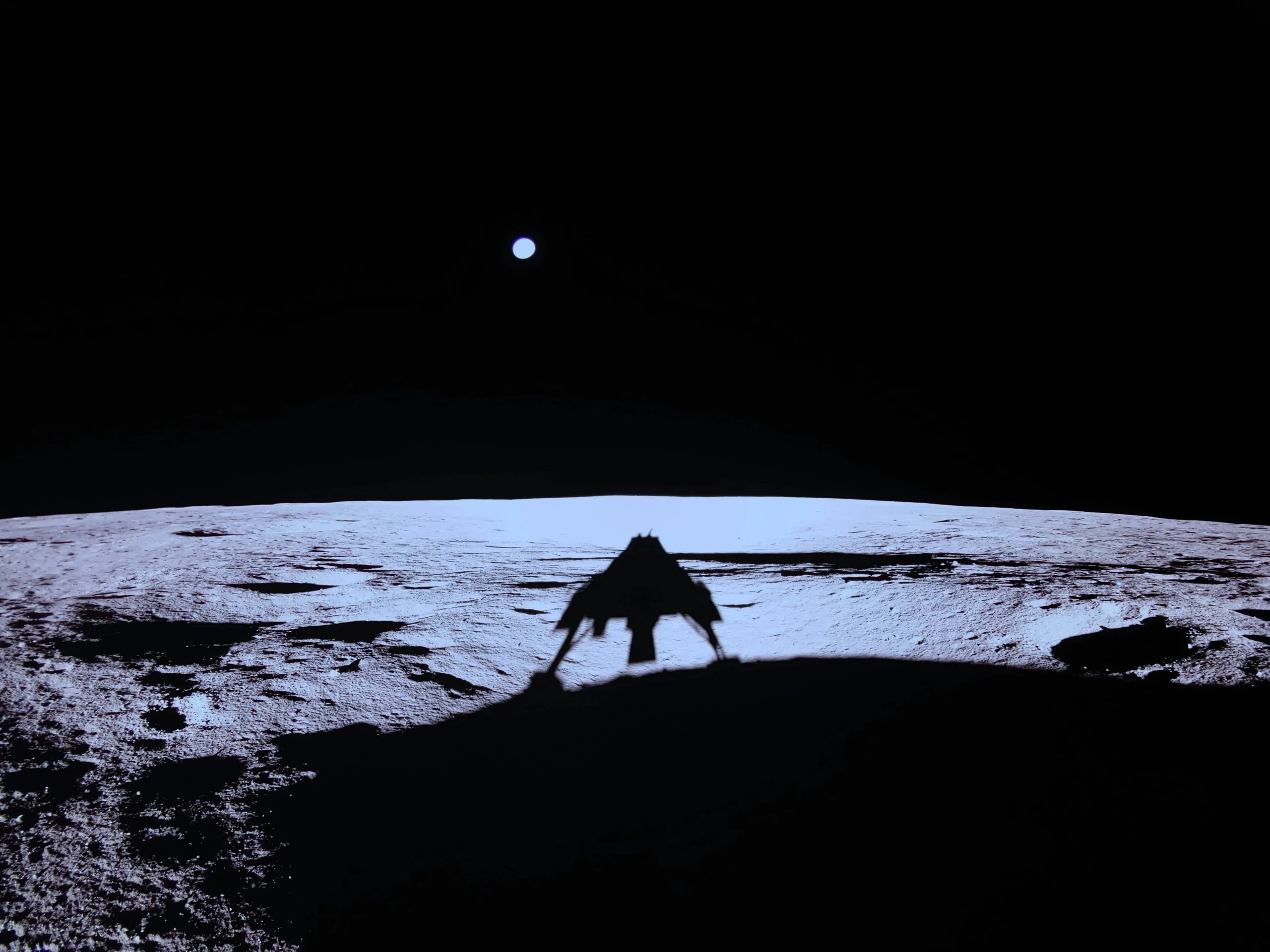
The Lunar Magnetotelluric Sounder (LMS) developed by Southwest Research Institute (SwRI) is probing the interior of the Moon to depths of up to 1100 km (700 miles), two-thirds of the way to the lunar center. This is one of ten NASA – National Aeronautics and Space Administration Commercial Lunar Payload Services (CLPS) commissioned payloads.
The LMS is analysing natural variations in electric and magnetic fields to determine how electricity flows through subsurface materials, revealing their composition and structure. The ingenious design of LMS involves four electrodes deployed via spring mechanisms to distances of about 20 m from the central electronics box (shown in the video), creating a 40 m baseline. These electrodes, connected by wires to the central unit, measure voltage differences much like a conventional voltmeter. Meanwhile, a magnetometer is deployed on a 2.5 m vertical mast (also shown in video) measures magnetic field variations, carefully positioned to minimize interference from the lander itself.
By measuring changes in electric and magnetic fields caused by solar wind variations and Earth’s magnetosphere, LMS captures how these external influences induce changes within the Moon’s interior. The resulting data creates a vertical profile of electrical conductivity that provides insights into the temperature and composition of materials deep within the lunar mantle.
“The five individual subsystems of LMS, together with connecting cables, weigh about 6.5 kg (14 pounds) and consume about 11 watts of power,” notes the project team. This compact yet sophisticated payload represents a collaboration between NASA Goddard Space Flight Center, the independent non-profit Southwest Research Institute, and New Space partner Heliospace. Together, they demonstrate how public-private partnerships advance lunar science through innovative technological solutions.
While primarily designed to illuminate the Moon’s material differentiation and thermal history, the magnetotelluric technology builds upon decades of similar methods used on Earth to locate water and mineral deposits. As humanity prepares for sustained lunar presence, instruments like LMS may provide crucial data about potential subsurface resources within the lunar mantle. Identifying deposits of water ice, rare minerals, or other materials of interest could prove instrumental in establishing self-sustaining lunar operations. Through these sophisticated electrical and electromagnetic measurements, LMS not only advances our understanding of our celestial neighbour but potentially maps the very resources that might one day support human presence on the Moon.
Beneath Lunar Dust: NASA Blue Ghost Mission Utilizes Magnetotelluric Sounder to Chart Moon’s Interior