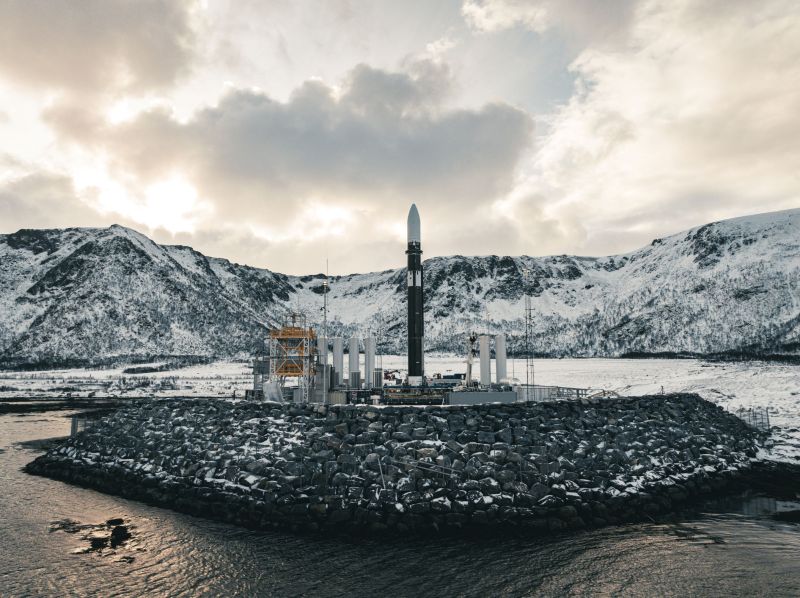
Isar Aerospace marks a pivotal moment in European space history as it counts down toward the maiden flight of its Spectrum rocket from Norway’s Andøya Spaceport, with permission granted by the Norwegian Civil Aviation Authority (NCAA). The launch, scheduled within a window from today until March 30th pending favourable weather conditions, represents not only the culmination of seven years of dedicated engineering but also positions Isar to achieve what German competitor Rocket Factory Augsburg – RFA had initially aimed for – becoming the first European company to conduct a vertical orbital launch from European soil (excluding Russia).
The Munich-based startup, named after the river running through the Bavarian capital, has developed the two-stage Spectrum rocket entirely in-house, showcasing German engineering in a country with historical roots in rocket development. The company has raised more than 400 million euros to date. It plans a factory producing up to 40 Spectrum rockets per year.
Spectrum features nine turbopump engines using liquid oxygen and propane propellants for its main booster, complemented by a single Aquila multi-ignition engine designed for precise orbital insertions once in space. Spectrum as a small to medium-lift launch vehicle is capable of delivering up to 1,000 kilograms (2,200 pounds) to Low-Earth Orbit (LEO).
For this inaugural test flight, Isar has chosen a conservative approach by not carrying customer payloads, instead focusing on gathering critical flight data to validate their design and operational protocols.
The launch will also represents a milestone for Norway’s Andøya Spaceport, which opened in 2023 with infrastructure specifically designed to accommodate Isar’s Spectrum vehicle. This partnership between German engineering and Norwegian facilities demonstrates the cross-border collaboration strengthening Europe’s space capabilities.
Before achieving proven flight heritage, Isar has already secured commercial contracts, including a recent agreement with the Norwegian Space Agency to launch their Arctic Ocean Surveillance satellites by 2028. This vote of confidence from a national space agency underscores the potential seen in Isar’s technology and approach.
The launch comes at a critical juncture for European launch capabilities, particularly after RFA experienced setbacks during engine tests at the UK’s SaxaVord facility in August 2024. If successful, Isar’s achievement would represent not just a company milestone but a significant advancement for European space sovereignty and launch independence.
Image Credit: Isar Aerospace – The Spectrum rocket on the launch pad at Andøya Space Center in Norway
German Isar Aerospace to Make History with First European Vertical Orbital Launch from Norway