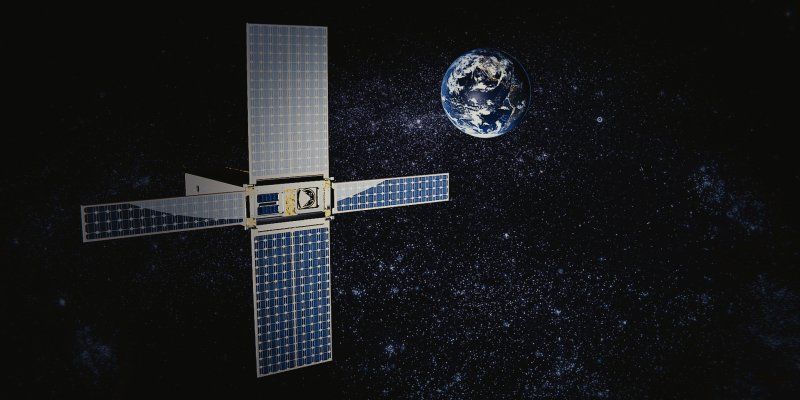
The Garatéa-L mission, now in its final qualification phase with the Brazilian Space Agency (AEB/MCTI, represents an important evolution in Brazil’s approach to space ventures and its participation in the global New Space ecosystem. This ambitious initiative, first proposed in 2015 by Lucas Fonseca from Airvantis, aims to expand Brazil’s space capabilities while exploring new collaborative approaches for the country’s space sector.
In the Tupi-Guarani language, “garatéa” means “life search” – a fitting name for a mission focused on investigating life’s resilience in extreme environments. The mission, spearheaded by the NewSpace Brazil alliance (Aliança das Startups Espaciais Brasileiras – ASB) and the Garatéa Institute, aims to send a cubesat to lunar orbit carrying bacterial cultures to investigate the impact of extreme environments. The project will conduct important research in astrobiology and space medicine, investigating how microorganisms adapt to cosmic radiation and extreme conditions, while also collecting multispectral images of the Moon’s Aitken basin.
The Garatéa-L project balances three core pillars: scientific advancement, entrepreneurial development, and educational outreach. Its educational initiatives have already shown impressive results, reaching 10,000 Brazilian students through International Space Station experiments, with nearly 70% participation from public schools – nurturing the next generation of space professionals.
For ten years, Airvantis, a founding member of NewSpace Brazil, has persistently worked to advance Brazil’s position in the global space sector. This decade-long effort addresses a significant challenge in Brazil’s space landscape, where exports have been nearly negligible and activities primarily target domestic markets through government co-funding.
The journey of Garatéa-L also highlights the regulatory hurdles facing New Space initiatives in Brazil. The complex approval processes have created significant barriers for space startups trying to enter the market. For Brazil to fully embrace the New Space revolution, streamlining these bureaucratic procedures will be essential to enable more agile, innovative companies to launch their projects and contribute to the sector’s growth.
By exploring new collaborative approaches between public and private entities, Garatéa-L could help Brazil evolve from its domestically-focused space program toward becoming a more active participant in the growing New Space ecosystem.
Although Garatéa-L was initially conceived to be Brazil’s first lunar mission, the approved SelenITA project is now scheduled to achieve that milestone. Nevertheless, Garatéa-L’s significance extends beyond being first to the Moon, as it continues to pioneer new approaches that could transform Brazil’s space sector for the future.
Garatéa-L: A Stepping Stone to Brazil’s New Space Future