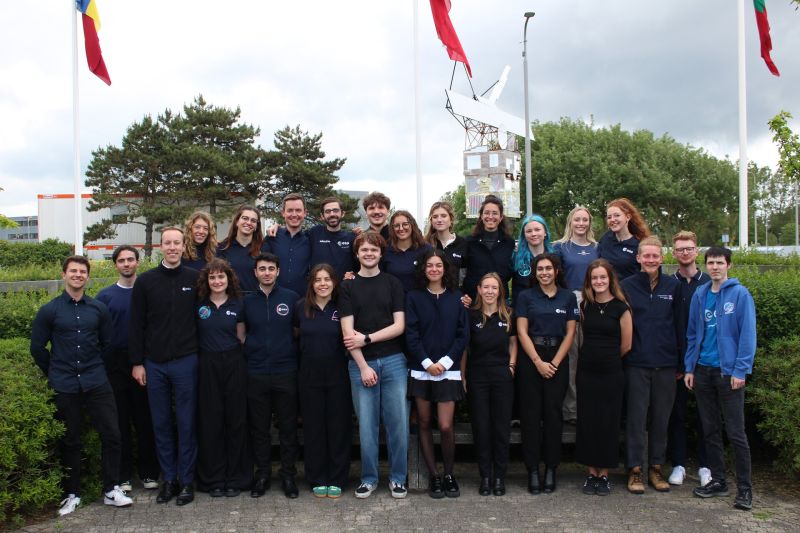
The next generation of space professionals is tackling one of humanity’s most pressing challenges in long-duration spaceflight: understanding how microgravity affects human physiology. Through the Young Professionals Satellite (YPSat-2) Programme, a distributed team of over 50 European Space Agency – ESA young professionals has developed a set of innovative experiments that will launch on board ESA’s Space Rider in 2027 to contribute to improved human performance in space.
At the core of YPSat-2 lies the Angiology in Microgravity (AIM) experiment, a biomedical investigation designed to study blood flow dynamics in weightless conditions. The focus centers on the internal jugular vein, where Deep Vein Thrombosis has been previously detected on board the International Space Station. The mission addresses critical health risks including blood stagnation, vessel deformation, and clot formation that threaten astronauts on extended missions.
The experimental approach combines engineering precision with biological insight. Using blood-mimicking fluid and a transparent, deformable vein phantom, AIM recreates vascular conditions in orbit. High-speed cameras, laser sheets, and embedded pressure sensors capture flow behaviours that remain invisible to conventional observation methods, providing unprecedented detail about microgravity’s effects on human circulation.
Space Rider’s unique capabilities make it the ideal platform for this investigation. Unlike short-duration parabolic flights or drop tower experiments, the reusable orbital vehicle’s two-month mission duration enables observation of hemodynamic changes over extended periods.
This mission represents more than scientific advancement; it demonstrates how young professionals can integrate multidisciplinary expertise spanning biology, fluid dynamics, and space engineering. From conception through construction, YPSat-2 exemplifies hands-on mission development, while addressing the evolving challenges of human space exploration.
Blood Flow in Microgravity: ESA Young Professionals to Advance Human Performance in Space