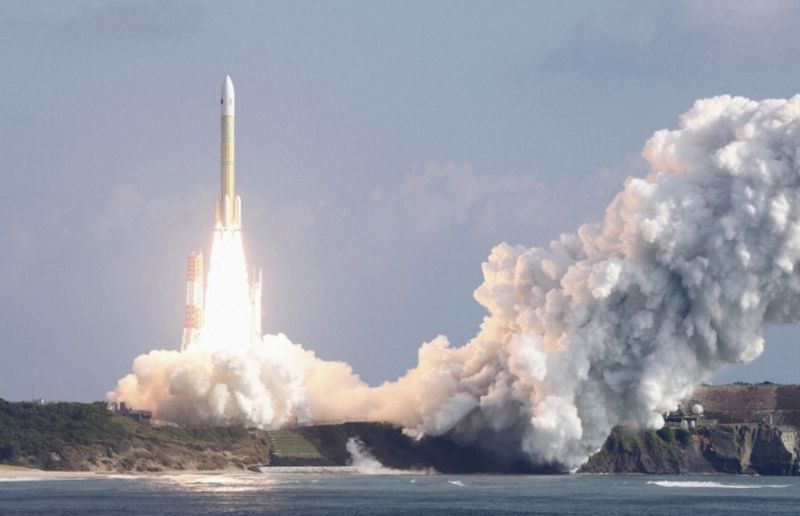
Japan has marked a major milestone with the successful launch of its H3 rocket, carrying the newly developed unmanned HTV-X1 cargo spacecraft on its first mission to the International Space Station (ISS). The launch took place at Japan’s Tanegashima Space Center, with JAXA: Japan Aerospace Exploration Agency confirming that the spacecraft entered its targeted orbit just 14 minutes after liftoff.
The HTV-X1, an advanced successor to JAXA’s H-II Transfer Vehicle known as Kounotori (“White stork” in Japanese), represents Japan’s continued contribution to international space logistics. Designed by Mitsubishi Heavy Industries (MHI) to transport up to 6,000 kilograms of supplies, the new cargo ship features improved efficiency, greater payload capacity, and the ability to provide in-flight power — essential for transporting temperature-sensitive laboratory samples. HTV-X also adds the capability to provide various users with on-orbit demonstration opportunities for up to 1.5 years after leaving the ISS until re-entry.
The mission is a collaborative achievement between JAXA and MHI, who jointly developed and operate the H3 rocket. Replacing Japan’s long-serving H-2A rocket, the H3 series is a two-stage medium-lift launcher designed to be more cost-competitive in the global launch market. The current flight marks another success for the H3 program, following several consecutive launches after an initial setback in 2023. This was the first flight ever of the new HTV-X cargo spacecraft. The HTV-X1 mission was the sixth successful flight of Japan’s H3 rocket and its seventh overall launch.
This mission confirms the reliability of the H3 launcher as well as Japan’s growing role in the future of space transportation with the successful delivery of cargo to the ISS. With the HTV-X1 capable of conducting extended orbital operations even after detaching from the ISS, Japan’s latest achievement signals a forward leap in microgravity R&D.
Japan Successfully Launches New Cargo Spacecraft which delivered Supplies to the International Space Station