The Moon has a problem.
“Survive and operate through the lunar night” is #1 on NASA’s 2024 Civil Space Shortfall Ranking. High power generation on the Moon is #2.
Both represent the same core issue: power on the lunar surface, where nights last 14 days. At the poles, some craters never see sunlight. Recent commercial landers couldn’t survive their first night.
For a lunar economy to thrive, we need power that’s persistent, scalable, and available when needed.
Current Tech’s Problem
Every kilogram to the Moon costs ~$1M, making it prohibitively expensive to scale onboard lithium-ion batteries to store enough power for a lunar night. They also can’t survive the extremely low temperatures.
Fission Surface Power can generate significant power, but distributing it to rovers venturing into craters would require wired solutions. That limits range and adds massive costs.
Solution
Instead of each rover bringing onboard power, a new paradigm is needed: Offboard Persistent Utility.
This is what Volta Space Technologies is proposing.
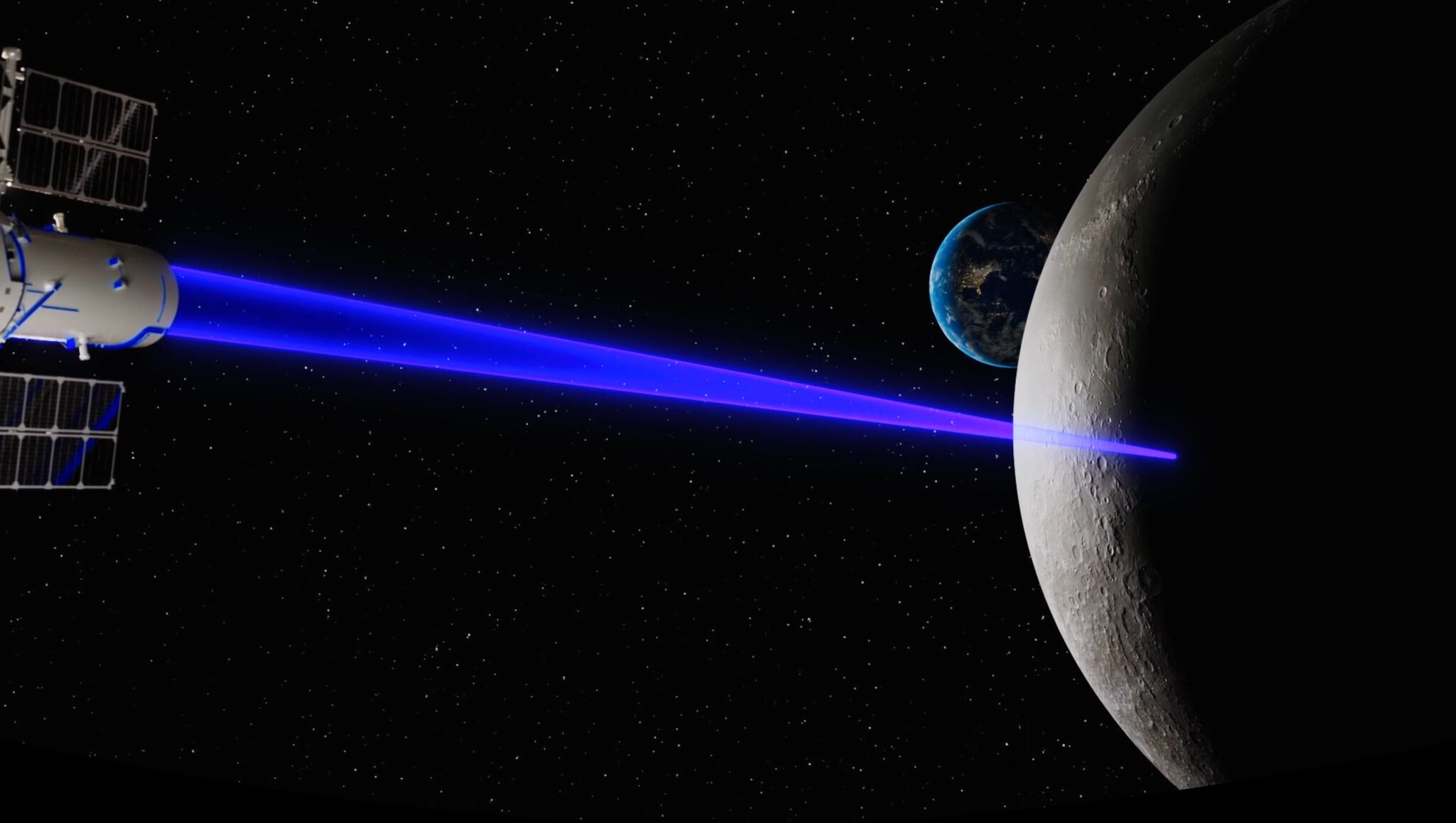
They are building LightGrid: a constellation of satellites in lunar orbit that collect solar energy and beam it to the surface using high-intensity lasers.
This is Optical Wireless Power Transmission (OWPT), and it changes the math of lunar exploration entirely.
Here’s how it works:
1. Users equip their rovers with the LightPort, a specialized 50 cm receiver.
2. Each LightPort can capture 1 kW of power in just 4 minutes of exposure.
3. That 4-minute charge provides ~60 Wh, enough to keep critical electronics warm and alive through the night in hibernation mode.
4. Multiple satellites can beam power at once if more is needed.
Reaching a 50 cm receiver from a 100 km orbit is no easy feat. Volta uses a closed-loop feedback system where the receiver reflects a beacon signal, allowing the satellite to lock onto the target with extreme precision.
With their technology, Volta expects to increase mission lifetime by 100x and reduce mass costs by 10x.
Building Momentum
Volta has proven the technology with successful field demonstrations and secured over $6.5M in contracts, with $50M in potential add-ons, including work with NASA, CSA, ESA, and the U.S. DoD.
The big news: Volta is launching LightPort to the lunar surface in 2026 with Canadian Space Agency funding to demonstrate their technology in the lunar environment.
The mission will include a retroreflector to calibrate their first power-beaming satellite during their second mission in 2028, when the first node of their orbital power network will be placed into lunar orbit.
Looking Ahead
Power is the foundation of the lunar economy. The more power available, the faster mining, construction, and research can scale. Volta’s orbital approach delivers what centralized solutions cannot: mobile, on-demand energy to rovers, ISRU plants, and instruments in permanently shadowed regions.
Volta Space: Beaming Power to the Moon