


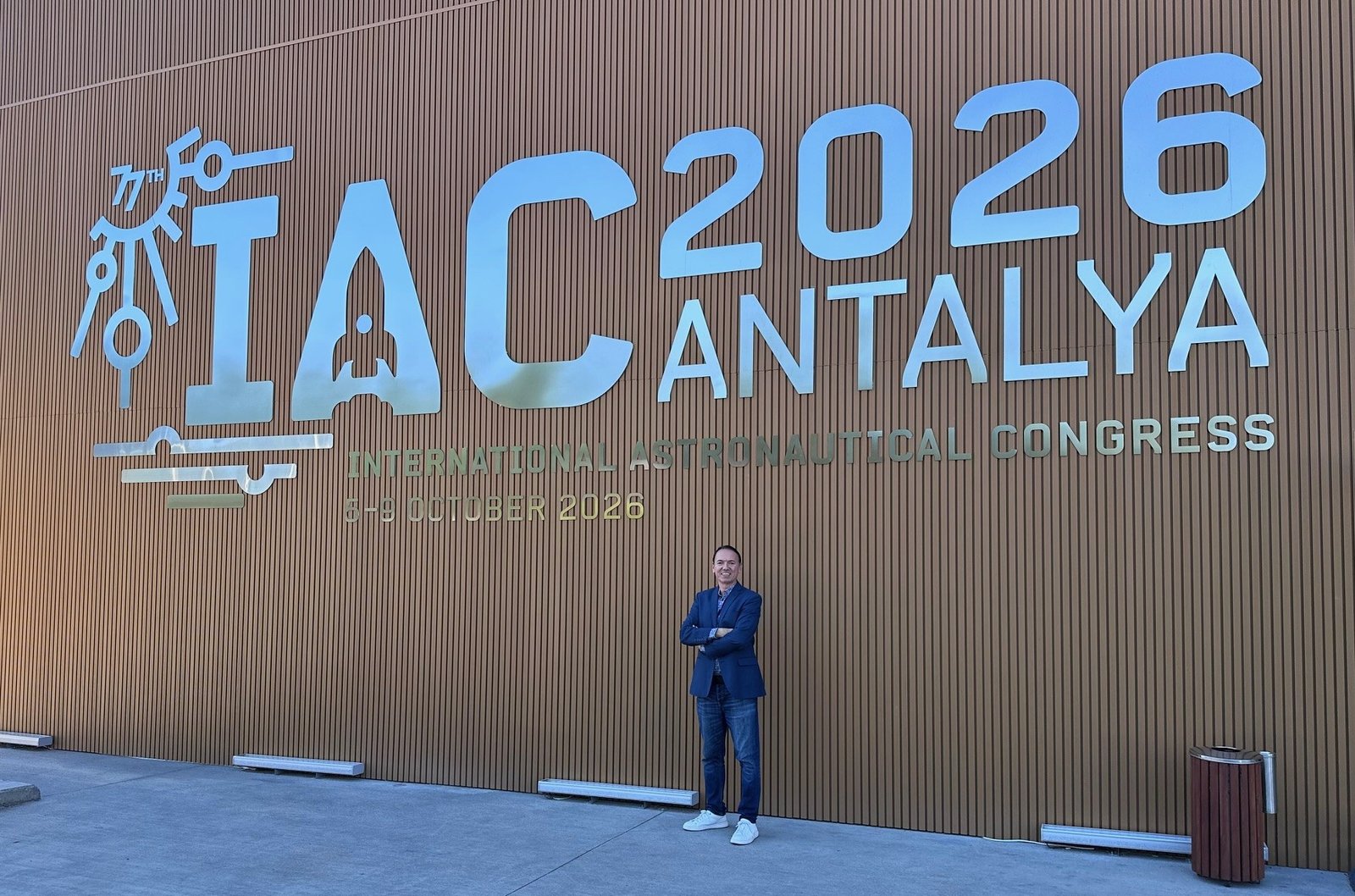
I attended IAC2026 in Antalya, organized by the Turkish Space Agency (TUA), a government funded institution and a good example of the traditional space approach. IAC2027 in Poznań will be organized by the European Space Foundation (ESF), a private non-profit and a good example of the New Space approach. As a long-time traditional space professional who now works in New Space, I would like to share my impressions of this year’s congress.
Organizing teams
IAC2026 was run by a relatively small, closed organizing team. The Polish organizers for IAC2027 have taken a more open route, with a broad team and invitations extended to many prominent members of the Polish space community. Łukasz Wilczyński, who leads the IAC2027 team, is also shaping the event to represent the space communities of Eastern Europe and the Baltics, and his outreach should bring many more companies to the event.
Venue
The NEST building was a challenge for an event of this size. The exhibition space was limited, and affordable quality accommodation was hard to find, which may have contributed to a registration number well below the just over 11,200 delegates registered in Milan, although Antalya is technically in Asia. There was no parking for registered guests, which may be understandable, but there was also no place to store bags. IT support at the venue also had room to improve, with some live global sessions delayed by 10 minutes or more.
The surroundings suit VIP guests well, with expensive resort hotels and golf courses nearby. IAC2027 will be held in Poznań, at the largest conference center in Poland, where I hope the NEST limitations will not be an issue.
Hospitality
Turkish people are rightly known for their hospitality, and I hope that came through despite some difficulties at the event. Taxis in Belek were costly even for the shortest distances, with drivers refusing to turn on the meters. Some of the official event hotels did not meet the standard attendees would expect, and hotels outside the official list raised their prices. This is not the image Turkish tourism deserves. Free bus transport from Antalya to Belek was announced less than a week before the event, which made planning hard. Food venues in Belek applied their regular tourist list prices, which are already high.
Attendance
I was hoping for record registered attendance, which did not happen. TUA reported 7,604 registered delegates from 111 countries and 18,642 total participants, including more than 11,000 visitors on Public Day on 9 October. The headline total includes many school children who visited the event, which is a wonderful way to inspire the next generation, even if it is a different metric.
The scientific programme was strong, with 8,330 abstract submissions from 108 countries. Türkiye contributed 1,810 submissions and 674 accepted abstracts, the highest accepted total among participating countries.
Opening Ceremony
The opening ceremony reflected an institutional approach, with the Turkish president taking part. His attendance came with strict security measures and long lines on the opening day. I did not attend the ceremony myself, as I stayed back to present on behalf of my team in case they did not make it to the global session on the opening day. I heard that the president’s speech started about 90 minutes behind schedule. Some of my team members and other students had sessions to present and wanted to leave to make it on time, but for security reasons nobody was allowed to leave the venue during the speech. This is a good example of how the institutional model prioritizes protocol, and a reminder for future organizers that attendees’ freedom of movement should not be restricted, especially when presenters have sessions to get to.
Future Space area supporting New Space start-ups
IAC2026 introduced the Future Space area for the first time in the congress’s history, combining next-generation space technologies, simulations and interactive experiences. The area gave real visibility to New Space start-ups, including Turkish New Space companies, and the organizers deserve credit for backing them.
The highlight of the Future Space area was the start-up competition, where I was a jury member. All the start-up participants had their stands in the Future Space area of the venue.
My personal experience
I had a great time staying in a villa with ten other Tumbleweed Microgravity staff and Tumbleweed Mars volunteers. After the technical morning sessions there were evening activities every day, with the Tumbleweed House party and Yuri’s Night as highlights. I spent a long time in traditional space before moving to New Space, and I have to say it is easier to connect with the new generation of space innovators than with the more formal traditional space community. I am building a growing space enthusiast network on LinkedIn, and judging from the response at the event, it is working. Thank you to everyone I met in person, and I hope to meet many more of you at the other conferences ahead.
Looking ahead
Hosting an IAC is a huge undertaking, and I thank TUA and the Turkish hosts for their effort in bringing the global space community together in Antalya. ESF is a New Space organization, and its more open organizing team is a promising start. Compared with the traditional, government-agency-led way of doing things, I hope the New Space approach will bring a more dynamic congress to Poznań next year, with more companies, start-ups and affordable options for attendees. Having a Future Space area again would be great. I am looking forward to IAC2027 and to seeing the whole community there.
Next year’s theme will be “One Space. Shared Future”. There is only one Earth and one Space, and a shared future for all of us. Let’s try to make it the best shared future we can for all species.