


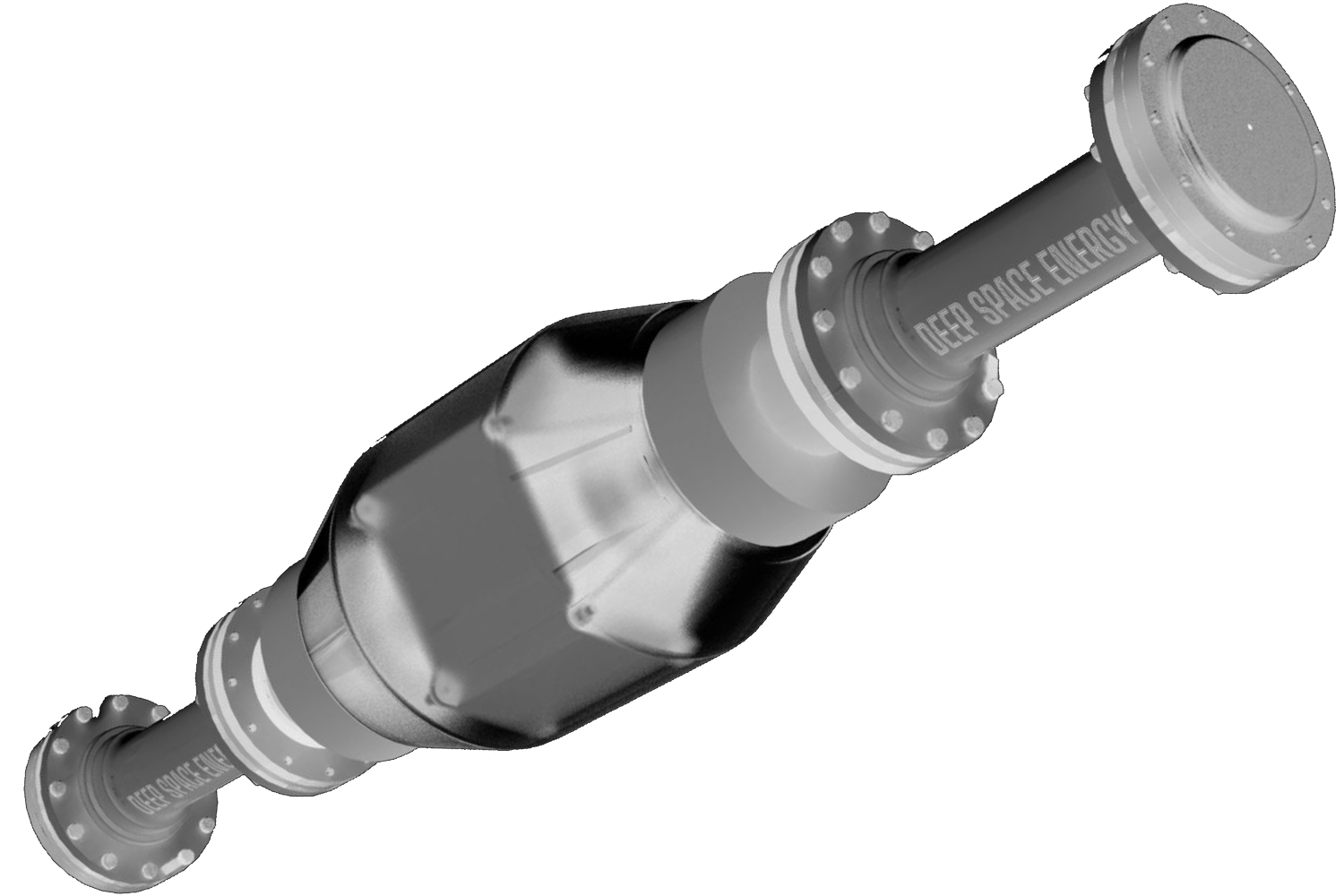
Solar panels power most space missions — but they are unable to generate power during the lunar night. At 354 hours long and minus 150 degrees Celsius, it is not a brief interruption; it is a mission-ending blackout. Continuous lunar exploration demands a power source that is compact, efficient, and independent of sunlight. Latvian startup Deep Space Energy is building exactly that.
Founded in 2022 by physicist Mihails Scepanskis, the Riga, Latvia based company is developing next-generation radioisotope power generators designed specifically for the harsh demands of deep space and lunar missions. To accelerate its technology toward commercialisation, the company recently secured €930K in funding — a €350K pre-seed round led by the Outlast Fund, backed by an additional €580K in public contracts and grants from the European Space Agency (ESA), NATO DIANA, and the Latvian government.
In space exploration, Radioisotope Heat Units (RHUs) use the natural heat produced by radioactive decay strictly to keep equipment warm. A Radioisotope Thermoelectric Generator (RTG) takes this further, converting that heat directly into electrical power. Deep Space Energy’s major innovation is the sheer efficiency of this conversion — their system requires only 2kg of Americium-241 fuel to generate 50W of power, roughly one-fifth the fuel that legacy RTG systems need for the same output. While the University of Leicester spin-off Perpetual Atomics is developing a RTG with 5% conversion efficiency Deep Space Energy’s design offers a more fuel-efficient alternative at 25% efficiency.
That efficiency is exactly what the sector needs. Space-grade radioisotope fuel is extraordinarily scarce, with projected Am-241 production capacity of approximately 10kg annually by the mid-2030s. Getting significantly more power from significantly less fuel is not a nice-to-have — it is a prerequisite for any credible lunar power strategy. There is already work to establish qualification standards for Am-241 systems in European space missions, a critical step toward flight readiness.
Beyond the Moon, the technology carries significant dual-use potential. Resilient, fuel-efficient nuclear power has clear applications for critical satellites in Earth orbit, placing Deep Space Energy squarely within NATO’s broader defence modernisation agenda.
The company targets the early 2030s for first flight missions, aligning with ESA’s lunar exploration timeline and NATO’s defence satellite modernisation programmes.
References:
From Nuclear Waste to Lunar Power: The Rise of Deep Space Energy (Latvian Space Startup)
https://youtu.be/bylFN2XzKyI?si=BOq3QUqz4VO5mmWe
Deep Space Energy Raises €930K to Power Europe’s Lunar Ambitions with Nuclear Batteries
Latvian startup builds nuclear waste-powered system to generate electricity on the moon
Making space accessible Generating power for space missions
https://le.ac.uk/research/stories/space-power/space-accessible
Radioisotope thermoelectric generator
https://en.wikipedia.org/wiki/Radioisotope_thermoelectric_generator
Deep Space Energy raises €930K for 5x more efficient RTGs
Deep Space Energy secures €350,000 in investment
https://latviaspace.gov.lv/en/news-events/deep-space-energy-secures-350000-in-investment
Europe’s Mars Rover Will Use New Nuclear Power Source https://www.scientificamerican.com/article/europes-mars-rover-will-use-new-nuclear-power-source/