


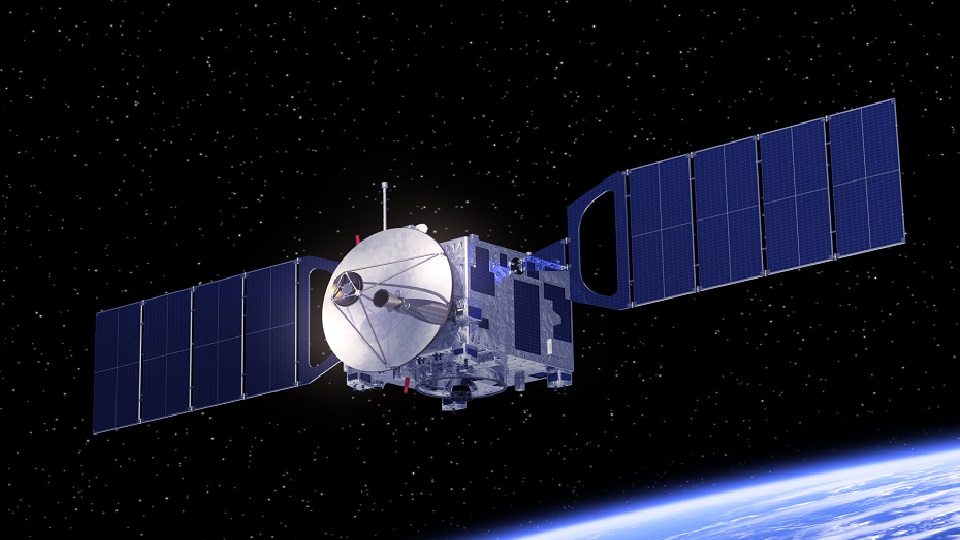
A research collaboration between @Loughborough University and the @University of Cambridge ,supported by £484,000 in funding from the UK Space Agency, aims to develop ultra-lightweight solar cells for space applications. This initiative highlights Loughborough’s diverse research capabilities, showcasing that its expertise extends far beyond its well-known strengths in sports.
The research focuses on creating a novel, adhesive-free method to seal high-efficiency Gallium Arsenide solar cells directly to ultra-thin glass. This approach promises to deliver an unparalleled power-to-weight ratio, significantly reducing payload costs. Additionally, the team is working on a durable anti-reflection coating for the thin glass surface, which will increase light transmission into the solar cell and provide passive cooling through infrared radiation reflection.
Professor Michael Walls from Loughborough’s @Centre for Renewable Energy Systems Technology (CREST) emphasizes the potential impact: “Using ultra-thin glass will lower weight and lead to efficient stowage of large area arrays enabling higher power payloads.” This advancement could dramatically reduce the costs associated with launching solar cells into space.
The implications of this technology extend beyond current space applications. As Professor Louise Hirst of Cambridge University notes, it could enable “future space-based solar power in which on-orbit solar farms beam power to terrestrial locations.”
There are also other innovative concepts in the field, such as the idea of rolling out thin solar panels and printing the necessary backside components in space (https://www.linkedin.com/posts/tolgaors_ism-inorbitdemonstration-spacepower-activity-7229822894514569217-bQgz).
These advancements in lightweight solar technology have potential applications not just in space, but also on Earth. The ultra-thin, highly efficient solar cells could revolutionize terrestrial solar power generation, particularly in weight-sensitive applications such as portable electronics, and building-integrated photovoltaics. This spin-off from space technologies underscores the far-reaching impact of space research on our daily lives and future energy solutions.