


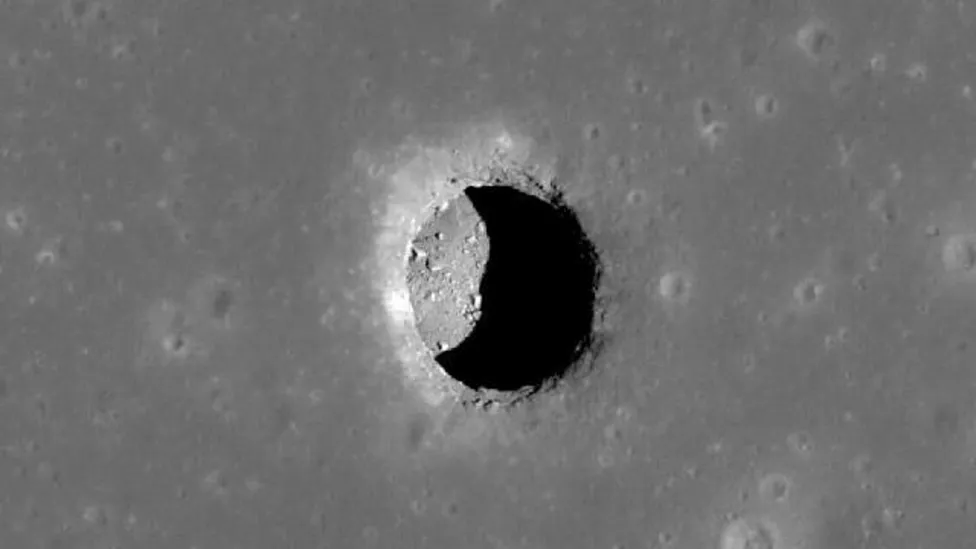
A recent paper “Radar evidence of an accessible cave conduit on the Moon below the Mare Tranquillitatis pit” has confirmed the existence of caves on the moon, opening up exciting possibilities for future lunar exploration and habitation. These subterranean structures, known as lunar lava tubes, offer a promising solution for protecting humans and vital electronic equipment from the harsh conditions on the lunar surface. https://www.nature.com/articles/s41550-024-02302-y
Lava tubes are natural underground tunnels formed by ancient volcanic activity. They are formed when the upper part of a given lava stream cools down and crusts while the lower part of it continues to flow, which results in the formation of an empty cave. These caves provide shelter from the extreme temperature fluctuations, radiation, and micrometeorite impacts that pose significant challenges to lunar missions.
The idea of living in caves on the Moon is not new as this article from 2016 proves: Cave Living on the Moon (https://www.smithsonianmag.com/air-space-magazine/cave-living-moon-180961494/)
However, we finally have evidence Mare Tranquillitatis pit, one of the deepest known lunar surface features, has an entrance to a cave.
Using the miniature Radio Frequency radar (https://science.nasa.gov/mission/lro/mini-rf/ ) aboard NASA’s Lunar Reconnaissance Orbiter, researchers have detected a large cavern at least 130 meters underground. This cave, measuring approximately 45 meters wide and 30 meters long, could be just the tip of the iceberg in terms of subterranean lunar real estate.
The discovery of accessible lunar caves has far-reaching implications for future moon missions. These natural shelters could serve as ideal locations for establishing long-term human outposts. Moreover, the stable environment within these caves makes them perfect for housing electronic equipment and communication infrastructure.
Beyond their practical applications, lunar caves also offer unique scientific opportunities. The protected environment within these structures may preserve pristine lunar materials, providing valuable insights into the moon’s geological history and composition. Now the question is if we can also find caves near the pole where there is near-constant sunlight, along with deposits of water ice—valuable resources essential for human habitation.