


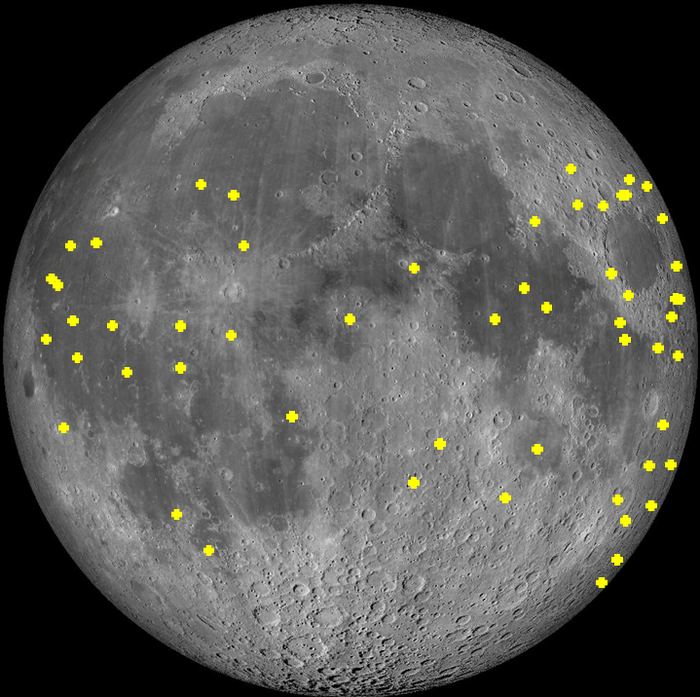
The @European Space Agency’s LUnar Meteoroid Impacts Observer (LUMIO) mission is set to enhance our understanding of meteoroid impacts on the Moon. This innovative CubeSat, scheduled for launch as early as 2027, will observe and characterize meteoroid strikes on the lunar farside.
LUMIO builds upon the success of its ESA-supported precursor, the NEO Lunar Impacts and Optical TrAnsients (NELIOTA) project, which began in 2017 to monitor the Moon for impact flashes using a refurbished telescope.
LUMIO’s primary objective is to detect the brief flashes of light produced when meteoroids impact the lunar surface. By continuously monitoring these impacts, the mission will provide crucial data on the spatial and temporal distribution of meteoroids in cislunar space. This information is vital for several reasons:
1. Enhancing our models of meteoroid flux in the Earth-Moon system
2. Assessing potential risks to future lunar exploration missions and habitats
3. Contributing to our understanding of near-Earth objects and their dynamics
The LUMIO CubeSat, despite its compact size, is equipped with advanced technology, including the LUMIO-Cam – a custom-designed optical instrument capable of detecting faint impact flashes. This space-based approach overcomes limitations of Earth-based observations, allowing for continuous monitoring of the lunar farside and detection of smaller impacts.
As we look towards a future of sustained lunar presence, missions like LUMIO become increasingly important. The data it collects will also inform strategies for protecting future lunar explorers and equipment from meteoroid impacts. The recent discovery of lunar caves as shelter will help with the countermeasure planning. (https://www.linkedin.com/posts/tolgaors_lunarexploration-mooncaves-spacehabitation-activity-7218882596343078913-F6zx)
LUMIO exemplifies the growing capabilities of small satellite platforms for deep space science missions. By monitoring lunar impacts, LUMIO will significantly contribute to our understanding of near-Earth objects (NEOs) and their dynamics. The mission will help refine our knowledge of the population, size distribution, and orbital characteristics of small NEOs that are often challenging to detect from Earth. This improved understanding is crucial for assessing potential impact risks to Earth and developing more effective planetary defense strategies. Moreover, LUMIO’s data will complement other NEO monitoring efforts like Ramses (https://www.linkedin.com/posts/tolgaors_spaceexploration-planetarydefense-asteroidmission-activity-7219328479060717568-Lvba). The consortium includes Politecnico di Milano, Argotec, Leonardo, IMT- Ingegneria Marketing Tecnologia, Nautilus, ECAPS, LMO and S&T Norway.