


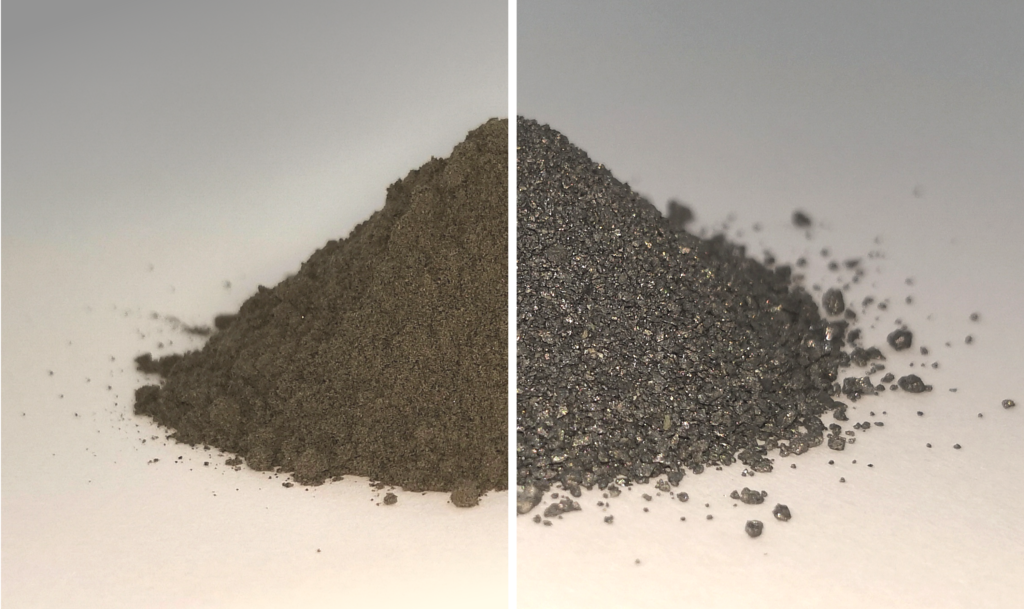
With national space agencies setting their sights on establishing a permanent human presence on the moon, the challenge becomes how to sustainably support lunar inhabitants. The answer may lie in the fine gray powder coating the moon’s surface – lunar regolith.
Studies have revealed that this unassuming moon dust is laden with untapped potential. Samples returned from the lunar surface confirm that lunar regolith is made up of 40-45% percent oxygen by weight, its single most abundant element, bound up in various minerals. By adapting technologies like the electrolysis process, this oxygen can be extracted for use in life support systems and rocket propellant. Demonstrator units to test oxygen extraction on the lunar surface are already under development and @Thales Alenia Space has signed a study contract with the European Space Agency worth one million euros for a payload concept to extract oxygen from Moon rock with @Metalysis, who perfected this process through the @ESA grand challenge. https://www.thalesgroup.com/en/worldwide/space/press-release/thales-alenia-space-wins-study-contract-develop-payload-extract
But the bounty of regolith doesn’t end with oxygen. The metal byproducts of the extraction process, which can make up over 50% of the regolith’s mass, are also garnering attention. These metals could potentially be used as a feedstock for 3D printing, allowing the construction of lunar base components from local materials. Different areas of the moon are richer in specific metals, with the lighter highlands abundant in aluminum and calcium, while the darker lowlands contain more iron and titanium.
By tapping into the resources lying right on the moon’s surface, space agencies and companies can drastically reduce the amount of supplies that need to be launched from Earth, where each kg comes with a hefty price tag. Utilizing oxygen and metals from lunar regolith is a key step towards the dream of a sustainable, permanent human presence on Moon. As technology advances, the barren lunar landscape may soon become the unlikely staging ground for our species’ next leap into the cosmos.
Picture Source: Oxygen and metal from lunar regolith https://www.esa.int/ESA_Multimedia/Images/2019/10/Oxygen_and_metal_from_lunar_regolith
On the left side of this before and after image is a pile of simulated lunar soil, or regolith; on the right is the same pile after essentially all the oxygen has been extracted from it, leaving a mixture of metal alloys. Both the oxygen and metal could be used in future by settlers on the Moon.