


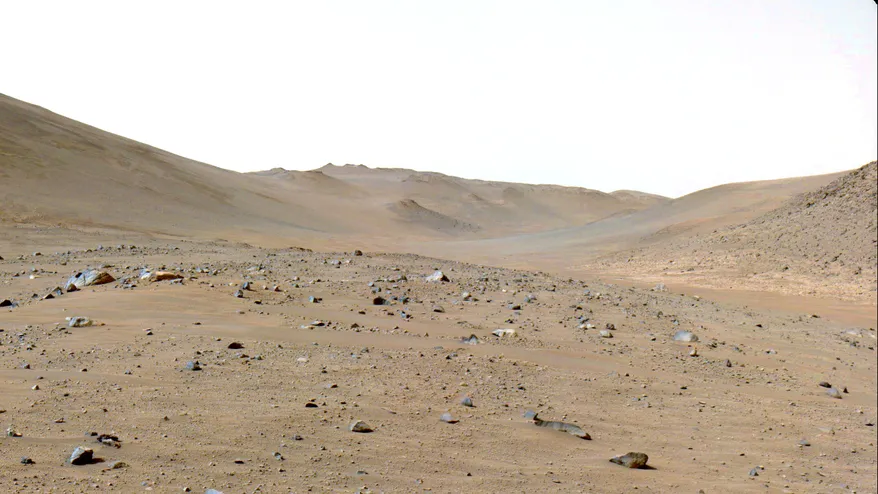
The Multi-Range Navigation for Fast Moon Rovers project, also known as FASTNAV, has worked on developing, maturing, and demonstrating a navigation solution for a new generation of lunar exploration rovers, with greater continuity of operation making it possible to reach farther distances and higher speeds.
This innovative project, led by @GMV’s UK subsidiary and supported by the @European Space Agency (ESA), represents a significant leap forward in planetary navigation technology. The FASTNAV system aims to increase the average rover travel speed to 1 m/s, a substantial improvement over the current 0.13 m/s. This advancement is crucial for meeting ESA’s lunar exploration scenarios, which require covering distances of up to 20 km in a single lunar day.
The FASTNAV solution introduces a paradigm shift towards continuous driving, surpassing current navigation and path-planning systems. By enabling faster travel speeds in space exploration, this technology promises to enhance scientific performance and data collection productivity in future missions.
The ongoing analog field campaign in Spain’s Bardenas Reales desert is putting the system through its paces, showcasing the capabilities of GMV’s technology across various terrains. The FASTNAV system must navigate autonomously, identifying and avoiding obstacles while maintaining the target average speed of 1 m/s.
GMV presented the progress of both FASTNAV and RAPID (a precursor project), and the conclusions from a study of the application of deep learning in the Mars Rover’s terrain classification capacity at the international @iSpaRo conference. These presentations highlight the ongoing advancements in planetary rover technology and the potential for improved exploration capabilities in future missions.
While FASTNAV represents a significant achievement with greatly improved speeds, it’s important to note that this approach still relies on high processing power and is based on a single planetary rover which creates a single point of failure. Alternative concepts, such as those proposed by @Team Tumbleweed, offer a different perspective. Their approach envisions a swarm of rovers that can roll at much faster speeds, propelled by Martian winds, potentially offering a complementary or alternative strategy for planetary exploration. https://www.linkedin.com/posts/tolgaors_teamtumbleweed-winddrivenrovers-marsexploration-activity-7209155488888872962-C98X