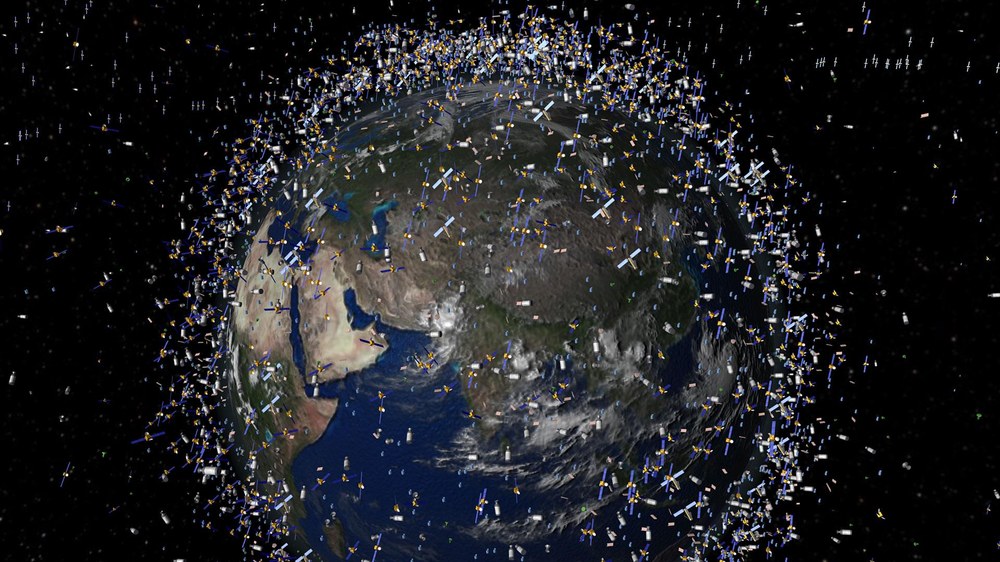
In our pursuit of space exploration and technological advancement, humanity has inadvertently created a growing challenge that orbits silently above us: space debris. This unseen menace travels at hyper-velocities around Earth, threatening everything from critical communication satellites to future human missions.
𝐔𝐧𝐝𝐞𝐫𝐬𝐭𝐚𝐧𝐝𝐢𝐧𝐠 𝐭𝐡𝐞 𝐒𝐜𝐚𝐥𝐞
Space debris encompasses any non-functional, human-made object in Earth’s orbit. According to the European Space Agency (ESA), around 36,500 objects larger than 10 cm are currently tracked, as well as an estimated 1.2 million objects between 1 cm and 10 cm and a startling 140 million pieces smaller than 1 cm [1].
2024 saw several major fragmentation events as well as many smaller ones, together adding thousands of new debris objects [2].
𝐓𝐫𝐚𝐜𝐤𝐢𝐧𝐠 𝐭𝐡𝐞 𝐓𝐡𝐫𝐞𝐚𝐭
A global network is constantly working to track objects in Earth’s orbit. Ground based radars emit radio waves that bounce off objects, enabling operators to determine range, velocity, and trajectory—particularly effective for objects in Low Earth Orbit. However, atmospheric conditions can affect radar performance, and tracking higher-altitude objects requires significantly more power.
To overcome the limitations of ground-based systems, satellites equipped with optical sensors are increasingly being deployed. These satellites can continuously observe debris from orbit, providing a more comprehensive view, especially for objects in GEO which are difficult to track from the ground.
𝐓𝐡𝐞 𝐄𝐯𝐞𝐫-𝐈𝐧𝐜𝐫𝐞𝐚𝐬𝐢𝐧𝐠 𝐃𝐚𝐧𝐜𝐞: 𝐂𝐨𝐥𝐥𝐢𝐬𝐢𝐨𝐧 𝐀𝐯𝐨𝐢𝐝𝐚𝐧𝐜𝐞 𝐌𝐚𝐧𝐨𝐞𝐮𝐯𝐫𝐞𝐬
With millions of debris pieces hurtling through space, active spacecraft must frequently perform collision avoidance maneuvers. The rise of large satellite constellations has dramatically increased the maneuver frequency which uses valuable propellant.
𝐂𝐨𝐥𝐥𝐚𝐛𝐨𝐫𝐚𝐭𝐢𝐯𝐞 𝐒𝐨𝐥𝐮𝐭𝐢𝐨𝐧𝐬 𝐅𝐨𝐫𝐰𝐚𝐫𝐝
Space debris represents a global challenge requiring international cooperation. As our dependence on satellite-based services grows, ensuring orbital sustainability becomes essential. Through comprehensive regulations, standards and coordinated global efforts, we can transform this challenge into an opportunity for responsible stewardship of our planets orbits. The future of, in particular Low Earth Orbit (LEO) which has most of the New Space activity, depends on our collective commitment to addressing this silent threat above.
𝐓𝐡𝐞 𝐒𝐢𝐥𝐞𝐧𝐭 𝐓𝐡𝐫𝐞𝐚𝐭 𝐀𝐛𝐨𝐯𝐞: 𝐍𝐚𝐯𝐢𝐠𝐚𝐭𝐢𝐧𝐠 𝐭𝐡𝐞 𝐏𝐞𝐫𝐢𝐥 𝐨𝐟 𝐒𝐩𝐚𝐜𝐞 𝐃𝐞𝐛𝐫𝐢𝐬