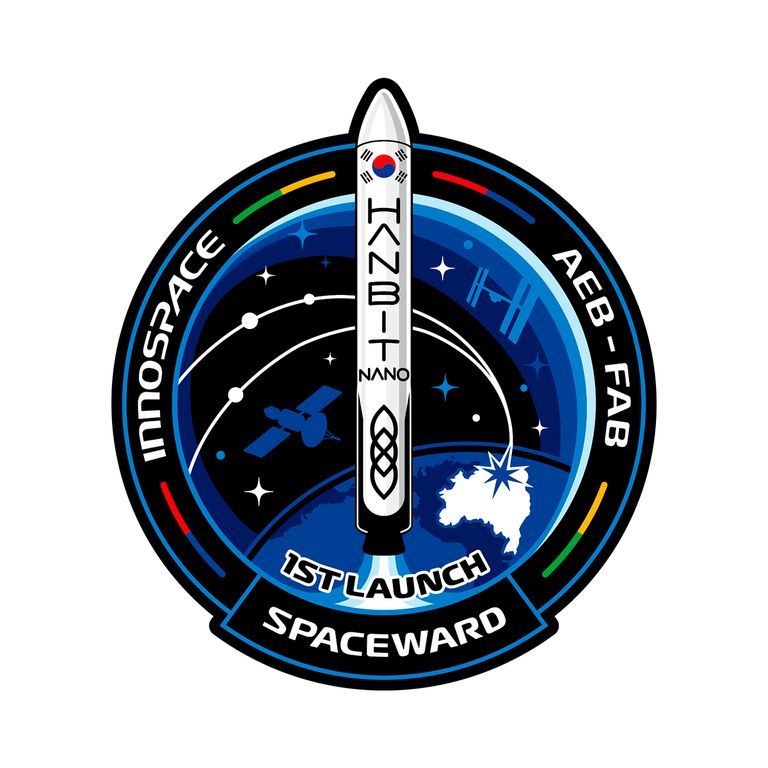
Today, South Korea’s INNOSPACE launched the Hanbit-Nano rocket from Alcântara, Brazil—marking both Brazil’s first orbital launch attempt and first commercial space mission. After about 30 seconds of flight, an anomaly was observed in the launch vehicle, already out of the initial launch phase, resulting in mission loss.
The mission name ‘SPACEWARD’ conveys the spirit of “Let’s Space Forward,” symbolizing Innospace’s first step toward space. But historic firsts are rarely perfect.
𝐀 𝐍𝐞𝐰 𝐂𝐡𝐚𝐩𝐭𝐞𝐫 𝐟𝐨𝐫 𝐒𝐨𝐮𝐭𝐡 𝐊𝐨𝐫𝐞𝐚𝐧 𝐂𝐨𝐦𝐦𝐞𝐫𝐜𝐢𝐚𝐥 𝐒𝐩𝐚𝐜𝐞
Founded in 2017, Innospace has become one of South Korea’s most promising space startups. The company made history on October 19, 2025, as the first to obtain a commercial launch license from KASA (the Korean Space Agency). Today’s orbital attempt comes just two years after their initial suborbital test flight in March 2023.
The Hanbit-Nano—”Great Light” in Korean—is a small orbital rocket with a 90-kilogram payload capacity. Its first stage uses a hybrid propulsion system powered by liquid oxygen and paraffin. The rocket represents the first step in the Hanbit family, designed to scale up to 1.3 metric tons with the upcoming Hanbit-Mini.
𝐁𝐫𝐚𝐳𝐢𝐥’𝐬 𝐆𝐚𝐭𝐞𝐰𝐚𝐲 𝐭𝐨 𝐒𝐩𝐚𝐜𝐞
Launched from Alcântara in Maranhão, this mission carried eight payloads, including five small satellites for orbital deployment and three non-separation experimental devices as below:
● Two satellites from Universidade Federal do Maranhão, including Jussara-K from Epic of Sun , Brazil’s first AI-powered satellite
● One satellite from Grahaa Space, India
● Two satellites and one Inertial Navigation System from Brazilian Space Agency (AEB/MCTI)
● One GNSS and one INS from CLC – Castro Leite Consultoria)
𝐖𝐡𝐚𝐭 𝐓𝐡𝐢𝐬 𝐌𝐞𝐚𝐧𝐬 𝐟𝐨𝐫 𝐭𝐡𝐞 𝐈𝐧𝐝𝐮𝐬𝐭𝐫𝐲
Innospace’s approach—extensive testing, learning from setbacks, system refinement—reflects the New Space engineering philosophy that prioritizes adaptation over traditional perfectionism. This iterative methodology is how reliable launch services are ultimately established.
Brazil’s space launch sector is on the right path to welcomes additional participants. With simplification of the regulatory process, Alcântara has the potential to compete with global spaceports not merely as a launch facility, but as a vibrant innovation hub for space technologies across Latin America.
South Korea is entering the commercial launch race. Brazil is emerging as a serious gateway to space. Today’s outcome doesn’t diminish these trajectories—it’s part of the journey.
The space industry is built on learning from attempts like these.
𝐖𝐡𝐞𝐧 𝐇𝐢𝐬𝐭𝐨𝐫𝐢𝐜 𝐅𝐢𝐫𝐬𝐭𝐬 𝐃𝐨𝐧’𝐭 𝐑𝐞𝐚𝐜𝐡 𝐎𝐫𝐛𝐢𝐭: 𝐈𝐧𝐧𝐨𝐬𝐩𝐚𝐜𝐞’𝐬 𝐒𝐩𝐚𝐜𝐞𝐰𝐚𝐫𝐝 2025 𝐌𝐢𝐬𝐬𝐢𝐨𝐧