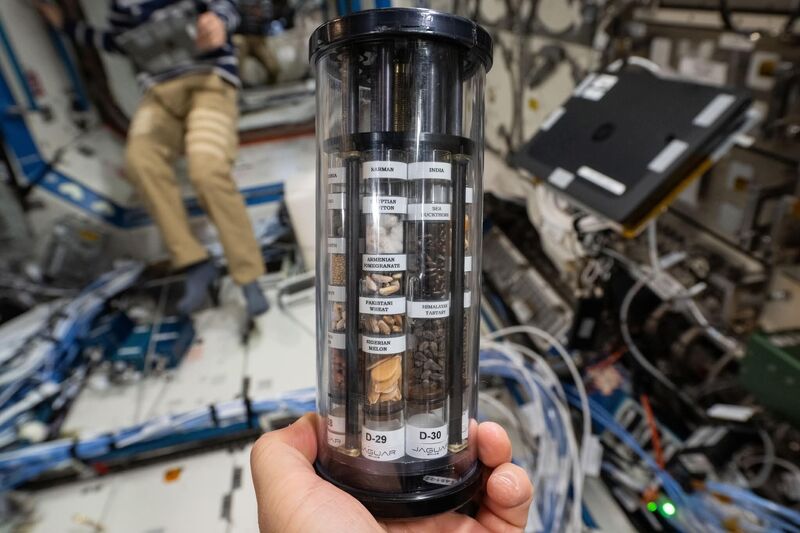
In a historic achievement for African space research, the Egusi melon seed (Citrullus lanatus) became the first Nigerian and West African seed to enter orbit on the International Space Station (ISS) launched with SpaceX Falcon 9. The mission “𝐄𝐦𝐞𝐫𝐠𝐢𝐧𝐠 𝐒𝐩𝐚𝐜𝐞 𝐍𝐚𝐭𝐢𝐨𝐧𝐬: 𝐒𝐩𝐚𝐜𝐞 𝐟𝐨𝐫 𝐀𝐠𝐫𝐢𝐜𝐮𝐥𝐭𝐮𝐫𝐞 𝐚𝐧𝐝 𝐀𝐠𝐫𝐢𝐜𝐮𝐥𝐭𝐮𝐫𝐞 𝐟𝐨𝐫 𝐒𝐩𝐚𝐜𝐞” explores how indigenous crops can contribute to long-duration space missions as well as Earth-based food resilience.
𝐖𝐡𝐲 𝐄𝐠𝐮𝐬𝐢 𝐌𝐚𝐭𝐭𝐞𝐫𝐬 𝐟𝐨𝐫 𝐒𝐩𝐚𝐜𝐞 𝐄𝐱𝐩𝐥𝐨𝐫𝐚𝐭𝐢𝐨𝐧
Egusi’s selection wasn’t arbitrary. With approximately 45.7% lipids and 23.4% protein, this West African staple delivers essential polyunsaturated fatty acids and amino acids critical for cardiovascular and muscular health—particularly valuable for astronauts facing microgravity-induced physiological challenges. As space agencies work to reduce dependence on Earth-based food supplies, nutritionally dense crops like Egusi offer promising solutions for sustainable space agriculture.
𝐅𝐫𝐨𝐦 𝐎𝐫𝐛𝐢𝐭 𝐭𝐨 𝐋𝐚𝐛𝐨𝐫𝐚𝐭𝐨𝐫𝐲
The mission represents a collaborative effort involving NASA – National Aeronautics and Space Administration, Jaguar Space, The Karman Project and Space in Africa (Temidayo Oniosun, Ph.D.). Following its time aboard the ISS, Egusi seeds underwent post-flight genetic and viability testing at the University of Florida and Nigeria’s International Institute of Tropical Agriculture (IITA) to assess DNA stability after exposure to radiation and microgravity. These studies examine whether the crop can retain its nutritional and genetic integrity under extreme space conditions.
𝐋𝐨𝐨𝐤𝐢𝐧𝐠 𝐀𝐡𝐞𝐚𝐝
Researchers are now working to breed compact, hull-less Egusi varieties suitable for hydroponic cultivation in space habitats. Beyond food production, investigations include potential applications of Egusi oil as a sustainable biopolymer or lubricant for extraterrestrial environments.
𝐍𝐢𝐠𝐞𝐫𝐢𝐚’𝐬 𝐆𝐫𝐨𝐰𝐢𝐧𝐠 𝐒𝐩𝐚𝐜𝐞 𝐏𝐫𝐞𝐬𝐞𝐧𝐜𝐞
This mission demonstrates how agricultural heritage from emerging space nations like Nigeria can advance both interplanetary sustainability and Earth-based food resilience. As Nigeria continues building its space capabilities, this mission serves as a powerful outreach tool, demonstrating that space exploration isn’t confined to traditional spacefaring nations. By integrating culturally significant crops into space research, such initiatives ensure nutritional diversity while inspiring the next generation of African scientists and space professionals who will shape sustainable space exploration for all nations.
𝐄𝐚𝐫𝐭𝐡 𝐒𝐞𝐞𝐝𝐬 𝐟𝐨𝐫 𝐒𝐩𝐚𝐜𝐞: 𝐍𝐢𝐠𝐞𝐫𝐢𝐚’𝐬 𝐄𝐠𝐮𝐬𝐢 𝐉𝐨𝐢𝐧𝐬 𝐌𝐢𝐬𝐬𝐢𝐨𝐧 𝐭𝐨 𝐀𝐝𝐯𝐚𝐧𝐜𝐞 𝐒𝐩𝐚𝐜𝐞 𝐀𝐠𝐫𝐢𝐜𝐮𝐥𝐭𝐮𝐫𝐞 𝐟𝐨𝐫 𝐄𝐦𝐞𝐫𝐠𝐢𝐧𝐠 𝐒𝐩𝐚𝐜𝐞 𝐍𝐚𝐭𝐢𝐨𝐧𝐬