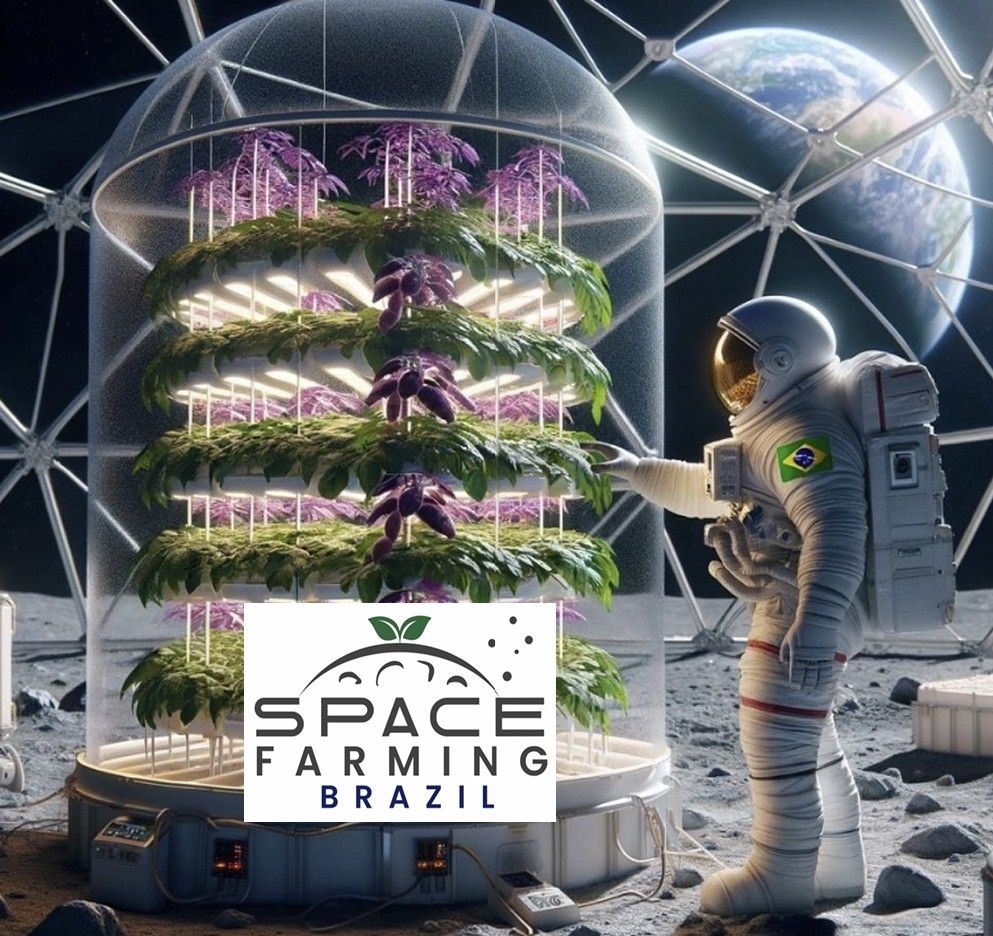
Brazil, one of the world’s leading agricultural nations, is extending its expertise beyond Earth. The 1st International Symposium on Space Agriculture, held October 14–16, 2025, at the PIT – Parque de Inovação Tecnológica São José dos Campos, brought together researchers, space agencies, and industry leaders to explore how Brazilian agritech can support sustainable food production for future space missions and strengthen food systems on Earth.
Organized by Embrapa, in partnership with the Brazilian Space Agency (AEB/MCTI), the symposium is part of Brazil’s growing participation in the Artemis Accords.
𝐃𝐚𝐲 1 – 𝐕𝐢𝐬𝐢𝐨𝐧 𝐚𝐧𝐝 𝐈𝐧𝐭𝐞𝐫𝐧𝐚𝐭𝐢𝐨𝐧𝐚𝐥 𝐂𝐨𝐨𝐩𝐞𝐫𝐚𝐭𝐢𝐨𝐧
The symposium opened with a focus on Brazil’s role in global space exploration. A keynote lecture on “Challenges and Opportunities of Space Exploration” was delivered by Ivair Gontijo of NASA JPL. Then a session on “Brazil in Space: Contributions and Perspectives in the Artemis Accords Context” explored how Brazil’s agricultural strengths can contribute to the Artemis Accords in the area of Space Farming.
𝐃𝐚𝐲 2 – 𝐁𝐫𝐚𝐳𝐢𝐥𝐢𝐚𝐧 𝐂𝐨𝐧𝐭𝐫𝐢𝐛𝐮𝐭𝐢𝐨𝐧𝐬 𝐭𝐨 𝐒𝐩𝐚𝐜𝐞 𝐅𝐚𝐫𝐦𝐢𝐧𝐠 𝐑𝐞𝐬𝐞𝐚𝐫𝐜𝐡
Brazilian researchers presented contributions addressing the fundamental challenges of cultivating plants beyond Earth. Sessions examined how cosmic radiation, microgravity and extreme temperatures affect plant health, crop development, and food production in extraterrestrial environments. Scientists explored how these space conditions influence plant physiology and growth patterns, while also considering an unexpected opportunity: the potential for the space environment to induce beneficial mutations in plants, generating new genetic variability that could lead to improved crop varieties for both space missions and Earth-based agriculture.
𝐃𝐚𝐲 3 – 𝐌𝐢𝐜𝐫𝐨𝐨𝐫𝐠𝐚𝐧𝐢𝐬𝐦𝐬, 𝐒𝐞𝐞𝐝𝐬 𝐚𝐧𝐝 𝐏𝐥𝐚𝐧𝐭𝐬 𝐢𝐧 𝐒𝐩𝐚𝐜𝐞
Researchers presented findings on the role of microorganisms in space agriculture, examining how cosmic radiation and microgravity affect soil microbiota associated with crops such as chickpea and sweet potato. A panel also shared experiences in sending biological experiments—including plants and seeds—to microgravity conditions, highlighting observable differences in growth patterns and development compared to controlled Earth-based studies.
The symposium represents more than an exchange of ideas—it establishes a foundation for ongoing collaboration between Brazilian researchers, international space agencies, and industry partners. The challenge ahead lies in translating research progress into practical systems that can sustain human presence beyond Earth, while ensuring these innovations create tangible benefits for agriculture on Earth.
𝐁𝐫𝐚𝐳𝐢𝐥 𝐇𝐨𝐬𝐭𝐬 𝐅𝐢𝐫𝐬𝐭 𝐒𝐩𝐚𝐜𝐞 𝐀𝐠𝐫𝐢𝐜𝐮𝐥𝐭𝐮𝐫𝐞 𝐒𝐲𝐦𝐩𝐨𝐬𝐢𝐮𝐦 𝐨𝐧 𝐅𝐚𝐫𝐦𝐢𝐧𝐠 𝐁𝐞𝐲𝐨𝐧𝐝 𝐄𝐚𝐫𝐭𝐡